
Travelers Among Mountains and Streams is an epic landscape painting by the Chinese artist Fan Kuan in the Northern Song Dynasty (ca. 1000 CE). The main intention behind the painting is to convey the neo-confucian and Daoist concept of a huge, well-organized world where humankind lives in a humble fellowship with the grandeur of nature. It was created not only as a decorative picture, but also as a tool of spiritual reflection and expression of the moral order that resides in nature.
To the travelers and art scholars investigating this masterpiece, its purpose could be a glimpse of the intellectual atmosphere of 11th century China. Landscape painting, referred to as shan shui (mountain-water) during this period, was a very serious philosophical tool. The best-known manifestation of this tradition is probably the work of Fan Kuan, who focused on the triviality of human activity in the face of the mountain and its strength, which cannot be destroyed or diminished.
What Does Travelers Among Mountains and Streams Mean?
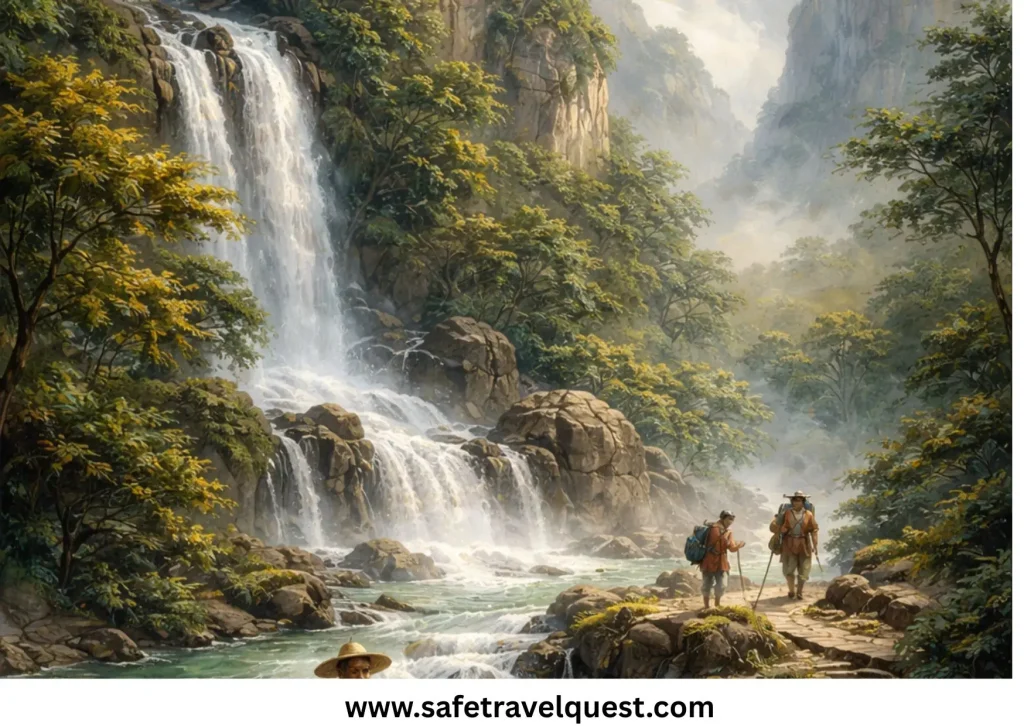
The image is a huge hanging scroll painted in ink and light colors on silk more than six feet tall. It is the characteristic piece of the monuments landscape style which was the movement which prevailed in the early Northern Song Dynasty. This piece of art is broken down into three stages; the foreground which is occupied by massive rocks, the middle ground consisting of a train of mules, and the background in which the giant is huge and central.
Artist Biography: Fan Kuan
Fan Kuan (c. 9601030 CE) was a reclusive intellectual-practitioner who moved out of the distracting urban environment to spend time in the wilderness of the mountains of Shaanxi Province. He was of the opinion that nature was the ultimate teacher of an artist. Fan Kuan lived all his life watching the geological formation, weather and vegetation of the Qinling Mountains to give the essence or lie of the Qinling Mountains as opposed to the styles of past masters which the former studied before painting.
History: The Northern Song Dynasty.
Northern Song period followed a period of excessive political disintegration called the five dynasties and ten kingdoms. Following the reunion of China, it was a strong cultural yearning of being in order and stability. This thirst was reflected in Neo-Confucianism philosophy that was aimed at discovering a rational, moral hierarchy in the universe. The mountains, as the artists sought in them, the most stable, eternal, and massive of these symbols, were the highest expression of this universal order.
What Did the Painting Aim to accomplish?
The aim of Travellers Among Mountains and Streams goes way beyond the beauty of its aesthetic value. It was also to be used as a spiritual retreat on the part of the viewer enabling one to have a distant sight without actually leaving their seat.
Spiritual and Philosophical Intents
To the Song gentry and the scholars the painting served as a source of mindful thinking. It enabled officials in the city to travel mentally in nature, and reestablish contact with the Dao (the Way). The artwork was supposed to initiate the feeling of awe in the viewer as well as make them consider their position in the line of the cosmic order.
Symbracian Figurative Art: The Power of Nature over Man.
One of the major aims of the work is to depict the enormousness of nature. The two thirds of the silk in the painting are occupied by the mountains. The travelers, which is a mule train followed by two men, are so minute that they can easily be overlooked. This conscious scale-playing has the effect of making the viewer feel humbled and supports the notion that humanity is a small, insignificant fragment of an enormous and mighty landscape.
The Landscape in the Song Dynasty Art.
A Chinese may not call a physical feature of mountains and water simply as shan shui (mountains and water); it is the skeletal and circulatory systems of earth. Landscape was regarded as the most supreme painting since it was able to represent the whole universe.
- Mountains: The mountains are perceived to be the bones of the earth and a meeting point between heaven and man. The main peak in the work of Fan Kuan is the Emperor of the Supreme Ruler in a perfectly ordered state.
- Water: The waterfall and streams are a symbol of blood or life-force (qi), and thus make the otherwise still and lifeless mountain moving and alive.
- The Travelers: They are a symbolic membership to the trip of life and the human endeavor to go through the immenseness of the world and it presents the aspects of struggle and harmony that is found in life.
You may also like it:
Bible Verses to Travel Safely: How to Find Peace in the Journey.
Is it Dangerous to Travel to Turkey?
How to Travel on a Plane with Fresh Tattoo
This is how the Painting is a reflection of Chinese philosophy.
The masterpiece of Fan Kuan is a synthesis of the major philosophies of his time that incorporated ethics of Confucianism and mysticism of Daoism.
Daoist Influence
The Chinese focus on spontaneity and harmony with nature, as well as the conviction that the universe is a self-regulating system are a few things that Daoism focuses on. The haze that divides the middle ground with the mountain base is a typical Daoist feature, symbolizing the wu wei (non-action) or the blank nothingness through which everything is created.
Neo-Confucian Context
Neo-Confucianism aimed at revealing the li (underlying principle) of everything. Fan Kuan was trying to embrace the truth of nature by discretely anthropomorphizing all the rocks and trees. The main peak integrates the absolute truth and the main power of the universe and this shows a Confucian admiration to hierarchy and order.
The Techniques of Art employed by Fan Kuan.
Fan Kuan invented revolutionary methods in order to assist the spiritual aim of the painting so that the viewer could include the tangible existence of the mountain.
- Raindrop Texture Strokes: This is called yudian cun, these are small staccato strokes of the brush to create the texture of the rocks. They recreate the rough and spent texture of the Shaanxi mountains, giving the feeling of weight and mass.
- Tripartite Composition: In the painting, there is the use of three distances; near, middle, and far. This building helps direct the eye to soar upwards, resembling the actual motion of raising the eyes to see a mountain on a valley floor, which adds to the impression of the monumentality.
- Ink Wash and Depth: Fan Kuan applied different shades of ink to bring the effect of perspective of the atmosphere. The fog in the bottom of the mountain is made by leaving the silk plain, which gives the illusion of a breath in the air and helps to distinguish the human sphere and the heavenly one.
The significance of this painting to art history
The Travelers Among Mountains and Streams set the foundation of the ideal of Chinese landscape painting in the next millennium. It displaced art as a suitable ground on which human tales were told and brought it to a stage of serious philosophical investigation.
This picture is now in possession of the National Palace Museum in Taipei. It is regarded as a “National Treasure” and is never put on display because it is so old and delicate. Its impact is evidenced in the works of later masters such as Guo Xi and even the Yuan Dynasty literati who still used the mountain as the symbol of the inner self of the artist and the moral order of the world.
Frequently Asked Questions
What is the meaning of Travelers Among Mountains and Streams?
The painting also represents the unity of the human race with the enormous, well-structured universe. The high central peak as the embodiment of absolute power of nature (or well-ordered system of things) and the small travelers are the expressions of humble and short-lived existence of the human beings in that system which is eternal in its essence.
Why is the size of the travelers in the painting small?
Fan Kuan used to be small in order to highlight the magnificence and the might of nature through the travelers. The painting also makes the viewer admit the insignificance of man in comparison with the natural forces that are eternal and mighty by overshadowing the figures of men.
What philosophy had an effect on Fan Kuan?
Fan Kuan was highly guided by Daoism and Neo-Confucianism. Daoism gave the spiritual relationship with the nature and the so-called nothingness, whereas Neo-Confucianism gave the interest in finding a rational, moral order and truth with the help of the natural world that should be looked into in detail.
Where can we find the painting nowadays?
The copy of the hanging scroll is in the National Palace Museum in Taipei Taiwan. It is a National Treasure and is very sensitive to the sunlight; therefore, it is only exhibited temporarily (usually 42 days) once every few years.
Final Perspective
The theme of Travelers Among Mountains and Streams is to encourage the spectator to a state of silent amazement. Through a brilliant juggling between technical accuracy and profound philosophical thought, Fan Kuan managed to produce a piece that acts as a time travel of the Northern Song world perception and an eternal reminder of how we relate to the earth. It has continued to form a part of cultural heritage, whereby both tourists and academics will always dig deeper into the scenery to unveil the universal laws that will overrule nature as well as ourselves.

I am a passionate writer who creates engaging, creative, and meaningful content that informs, inspires, and connects with diverse audiences.