
Traveling from Gwalior to Prayagraj takes you across two distinct regions of northern India—one shaped by the rocky hills and historic fortresses of Madhya Pradesh, the other defined by the expansive Ganga plains of Uttar Pradesh. The shift in landscape is subtle at first, then unmistakable as you leave the Chambal ravines behind and begin moving into fertile farmland, toll highways, and long straight corridors lined with dhabas and rest stations.
The road feels familiar to many long-distance travelers, yet every journey has its own rhythm. Early morning haze sits low across the plains, truck convoys slide steadily east and west, and the changing scenery provides an inviting backdrop for a calm, comfortable drive. If you’re planning the trip soon, understanding the Gwalior to Prayagraj distance, the best routes, and the right timing will make your travel smoother and more predictable.
This guide walks you through the distance, road conditions, alternate routes, public transport options, safety tips, and the weather factors that matter most. Whether you’re driving yourself, hiring a taxi, or exploring train and bus alternatives, this will help you travel with clarity and confidence.
Gwalior to Prayagraj
When you set out from Gwalior, the first part of the journey moves through a landscape of scattered rocky outcrops, stone quarries, and undulating highways. As dawn breaks, the air often feels cool and dry, especially from October through February. You see trucks emerging from the shadows of roadside warehouses, two-wheelers heading toward local markets, and fields spreading wide along the highway.
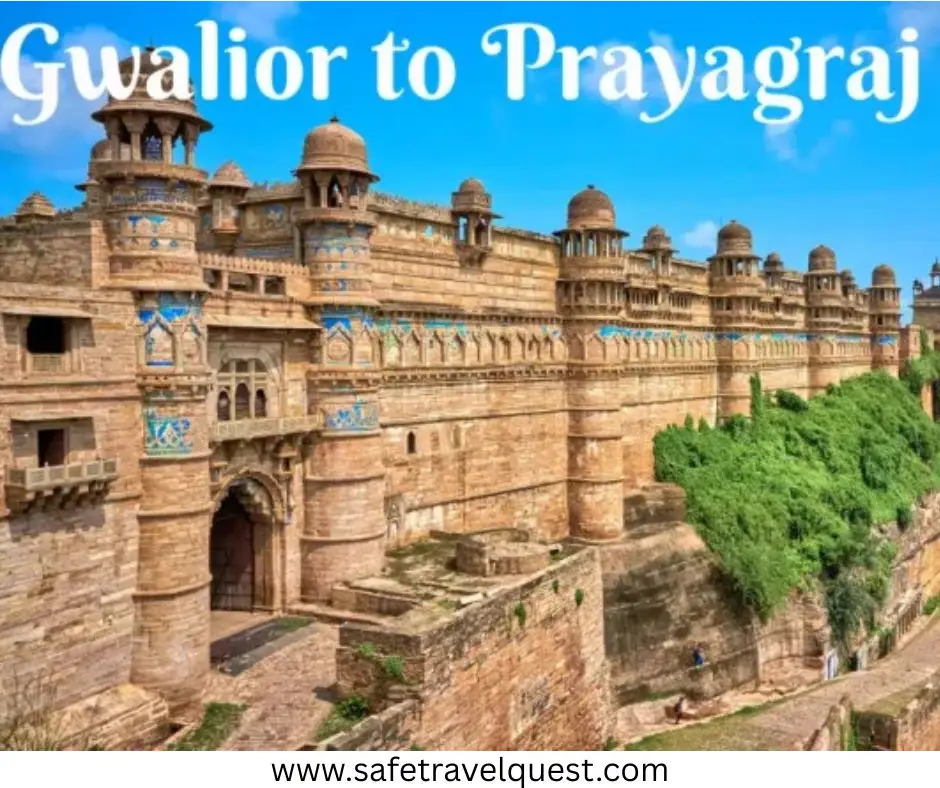
By the time you cross Jhansi or take the connecting corridors toward Kanpur, the terrain becomes gentler. Villages grow smaller, the horizon expands, and the plains ease you into Uttar Pradesh. Approaching Prayagraj, the city’s broad sweep of highways and developed intersections hints at its deep cultural significance and its growing modern footprint.
This guide helps you understand the Gwalior to Prayagraj distance, best routes, timing, and practical travel insights—so your journey feels relaxed and well-prepared.
Gwalior to Prayagraj Distance Overview
The distance between Gwalior and Prayagraj varies slightly depending on the route chosen, but the most commonly used corridor—via NH44 and NH19—is about 420 to 450 kilometers.
For most travelers, the journey takes 7.5 to 9 hours, depending on traffic, weather, and where you choose to stop along the way.
Why the NH44 → NH19 route matters
It is the most consistent arterial highway system connecting central India with eastern Uttar Pradesh. Both NH44 and NH19 are part of India’s major long-distance freight and passenger networks, monitored and maintained by the National Highways Authority of India (NHAI). This tends to keep road quality, signage, and connectivity predictable.
Travel time factors
• Truck density along NH44
• Traffic near Jhansi, Orai, and Kanpur
• Toll plaza slowdowns
• Fog or visibility issues during winter
• Midday heat during summer
• Construction diversions
Even with variables, the corridor remains one of the more comfortable long-distance routes in this region.
Read:Kanpur to Prayagraj Distance
Best Route: NH44 → NH19 Corridor
The most recommended and widely used path is:
Gwalior → Jhansi → Orai → Kanpur → Prayagraj
This combination of NH44 and NH19 offers strong visibility, predictable driving patterns, service availability, and four-lane comfort on nearly all major segments.
What makes this the best route?
Smooth four-lane stretches
NH44 is a well-maintained national highway running north-south across the country. The broad lanes and clear markings help maintain steady speeds.
Reliable signage and exits
Major junctions around Jhansi, Kanpur, and Prayagraj are well signposted. Navigation feels intuitive, even for first-time travelers.
Frequent services
Fuel stations, repair shops, rest areas, and eateries are evenly scattered. Traditionally busy zones such as Orai and Kalpi offer convenient breakpoints.
Good lighting around expressway-style sections
While not uniformly lit, certain critical areas near toll plazas and major towns have decent lighting, making evening travel safer than on many rural roads.
Travelers often rely on broad highway guidance from the Ministry of Road Transport and Highways (MoRTH) to stay informed about national road updates.
Typical timing on NH44 → NH19
• Start early (5–8 a.m.) → 7.5 to 8 hours
• Midday start → 8.5 to 9 hours
• Late afternoon start → 9+ hours
Morning drives offer the smoothest flow.
Read:Help Me Pack for My Trip to Jaipur Next Week
Alternative Routes and When They Make Sense
While NH44 + NH19 is the standard route, travelers sometimes consider alternatives based on preference or timing.
Gwalior → Etawah → Kanpur → Prayagraj
This route takes you through Uttar Pradesh earlier in the journey.
Advantages:
• Potentially lighter truck traffic on certain segments
• More rural scenery
Disadvantages:
• Some narrower sections
• More unpredictable road quality
• Fewer high-quality rest stops
Gwalior → Banda → Prayagraj
This is a scenic but geographically longer and often slower option.
Good if you prefer:
• More rustic landscapes
• A quieter, less traveled path
Not ideal because:
• Road conditions vary widely
• Limited services and lighting
• Heat and dust can be strong during summer
For travelers wanting comfort, consistency, and predictable timing, NH44 + NH19 remains superior.
Road Conditions Between Gwalior and Prayagraj
Understanding road quality helps set expectations.
Truck traffic
NH44 and NH19 are among India’s busiest freight routes. Expect steady truck movement throughout the day. Maintaining a safe distance and using clear overtaking judgment is essential.
Toll plazas
You’ll encounter several toll gates. Keeping FASTag ready speeds up crossings significantly. If FASTag lanes become congested, cash lanes often cause longer delays.
State-border transitions
The MP-UP border near Jhansi is usually smooth, but occasional checks or diversions may appear, particularly during festivals or election periods.
Construction or widening
Periodic patchwork, resurfacing, or barrier repairs may cause diversions. These are usually short and marked with cones or reflective boards.
Weather-related slowdowns
Fog is the primary concern in winter, especially from December to February. Visibility can drop sharply over long, flat stretches. Updates from the India Meteorological Department (IMD) help guide safe departure times.
Even with these factors, most drivers describe the overall road conditions as reliable for long-distance travel.
Best Time of Day to Travel
Why morning departures are ideal
• Cooler temperatures
• Better visibility
• Calm traffic before trucks and buses peak
• Easier city exits from Gwalior and Kanpur
Traveling between 5 a.m. and 8 a.m. gives you enough daylight to finish comfortably before nightfall.
Things to avoid
• Late-night departures — lighting is limited outside major towns.
• Fog season early mornings — visibility may be dangerously low.
• Evening peak hours — Kanpur and Prayagraj traffic can significantly extend your arrival time.
Timing your journey well is one of the most impactful safety measures.
Public Transport Options
If you’d prefer not to drive, there are multiple alternatives.
Trains

Several trains connect Gwalior and Prayagraj, with travel times ranging from 7 to 11 hours, depending on the route and stops.
You can check schedules and book tickets through IRCTC (IRCTC Official Portal).
Buses
Long-distance buses run via Jhansi or Kanpur. While not as fast as trains or personal cars, they provide budget-friendly travel. Travel times usually stretch to 10–12 hours with stops.
Government schedules are listed on UPSRTC (UPSRTC).
Outstation taxis

If you want flexibility without driving yourself, taxis offer direct point-to-point convenience. Costs vary, but comfort levels are high when traveling with reputable agencies.
Stops, Dhabas, and Services Along the Route
Long drives in northern India often feel incomplete without classic dhaba stops. The Gwalior–Jhansi–Kanpur–Prayagraj belt has plenty.
Food stops
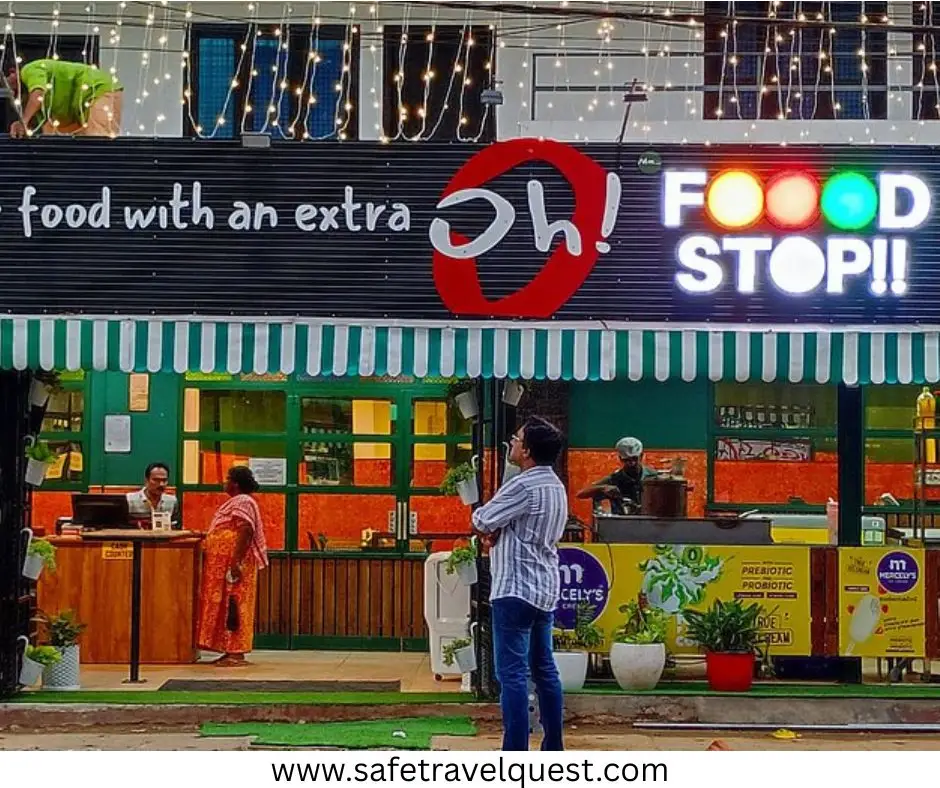
Between Jhansi and Orai, several well-established dhabas offer:
• hot parathas
• poha and chai
• dal fry and rotis
• fresh seasonal vegetables
• quick meals for early morning travelers
The quick service and high turnover help maintain food freshness.
Petrol pumps
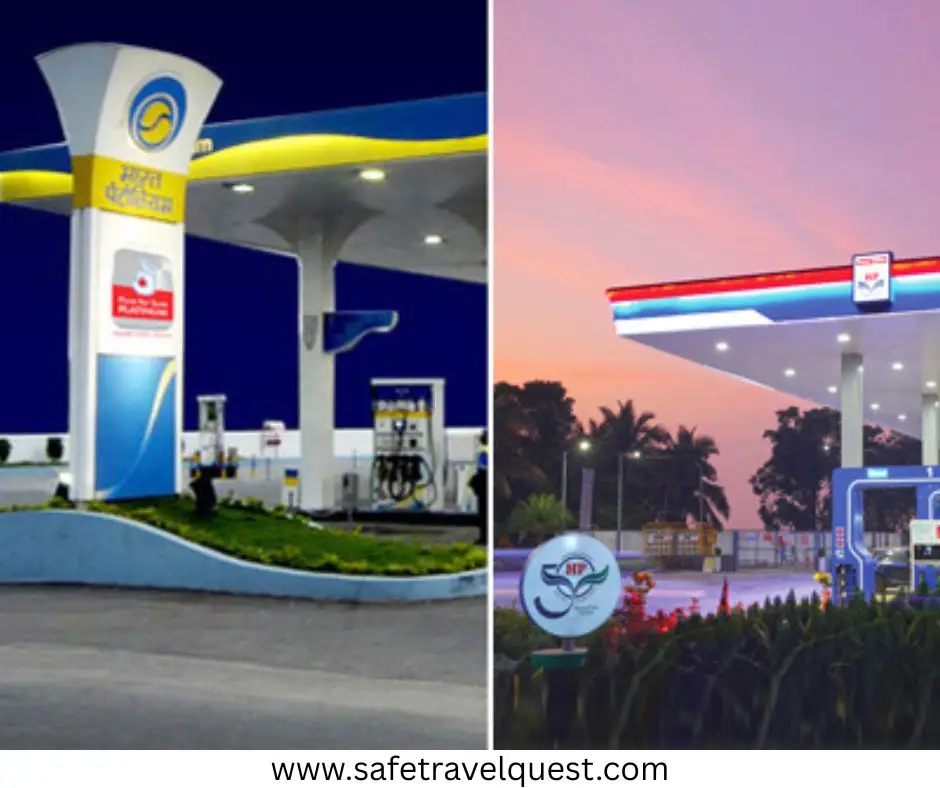
Major fuel stations include restroom facilities, tyre air stations, drinking water points, and sometimes basic repair support.
You’ll find clusters of stations around:
• Jhansi outskirts
• Orai and Kalpi
• Kanpur approaches
Rest points
Certain toll-road segments have sheltered areas for stretching legs during long drives. Many travelers appreciate these on summer afternoons.
Regional travel information from UP Tourism (UP Tourism) sometimes highlights popular stopovers along primary routes.
Driving Safety Tips for This Long Corridor
Long-distance driving across MP and UP is comfortable when you follow simple habits.
Maintain steady speeds
NH44 and NH19 are designed for smooth cruising. Avoid abrupt overtaking maneuvers.
Stay aware of trucks
Freight movement is constant. Maintain distance and avoid cutting too close while overtaking.
Use headlights early during winter
Even mild haze in the plains can reduce visibility. Proper lighting increases your safety and alertness to others on the road.
Keep FASTag balance ready
A depleted FASTag can slow you down at crucial bottlenecks.
Broader national safety recommendations are available at MoRTH (MoRTH Safety Resources).
Weather Considerations While Traveling
Winter
Fog can slow travel significantly. Visibility around Jhansi, Kanpur, and rural plains may drop, requiring slower speeds and fog lamps.
Summer
Heat rises quickly in MP and UP. Starting early reduces fatigue and decreases the need for roadside breaks under intense sun.
Monsoon
Rain showers may create slippery patches. While NH44 and NH19 handle drainage well, caution is still necessary, especially near construction areas.
Weather checks before departure via IMD (IMD Weather Updates) help plan safer trips.
Final Thoughts
The Gwalior to Prayagraj distance may cover several hundred kilometers, but the journey unfolds smoothly when you choose the right timing, route, and mindset. The NH44 → NH19 corridor remains the most dependable, well-serviced, and consistent pathway. You’ll cross vibrant towns, peaceful farmland, long toll stretches, and historic districts—each adding its own character to the drive.
With early departure, steady pacing, awareness of weather, and a few planned breaks, the trip feels relaxed and rewarding. Prayagraj welcomes travelers with its broad roads, rich heritage, and close connection to the Ganga. Whether you’re visiting for pilgrimage, family, academics, or exploration, the journey from Gwalior lays the perfect foundation for a memorable experience.
FAQs
What is the exact Gwalior to Prayagraj distance?
Approximately 420–450 km, depending on the chosen route.
What is the fastest route from Gwalior to Prayagraj?
The NH44 → NH19 corridor through Jhansi and Kanpur is the fastest and most reliable route.
How long does it take to travel by car?
Typically 7.5 to 9 hours, depending on traffic, weather, and break stops.
Are road conditions good on NH44 and NH19?
Yes. Both are major national highways monitored by NHAI and generally offer smooth four-lane driving with predictable services.
Is public transport available?
Yes. Trains (via IRCTC) and long-distance buses (UPSRTC) operate between these regions, though travel time varies.
When is the best time to start the journey?
Early morning, especially between 5 and 8 a.m., for cooler temperatures and lighter traffic.

I am a passionate writer who creates engaging, creative, and meaningful content that informs, inspires, and connects with diverse audiences.