
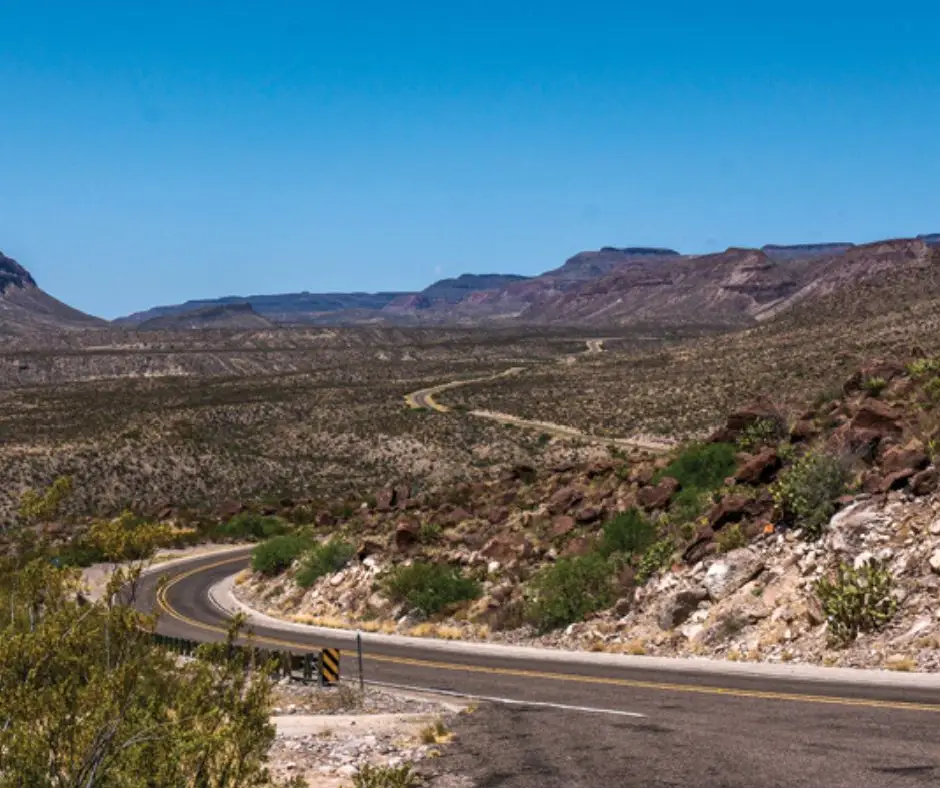
The road between Marfa and Alpine feels like a quiet ribbon through the desert.
The sky stretches wide.
Light falls clean across low grass and distant ridges. Traffic is thin, and the hum of your tires becomes the loudest sound.
If you are planning on driving from Marfa to Alpine, it is natural to think about safety. The land feels remote. Services are limited. You may ask yourself about the safest routes from Marfa to Alpine, how the roads feel in daylight, and whether Marfa to Alpine night driving is a good idea.
This guide looks at both routes and Safest Routes , day and night, so you can travel with a calm mind and enjoy the beauty of West Texas along the way.
Quick Overview of the Area
Marfa and Alpine sit only about 26 miles apart by road, linked mostly by US-90 / US-67, with an average drive time of around 30 minutes in normal conditions.(Distance-Cities) It is a short hop in West Texas terms, but the space between them feels wonderfully open and a little wild.
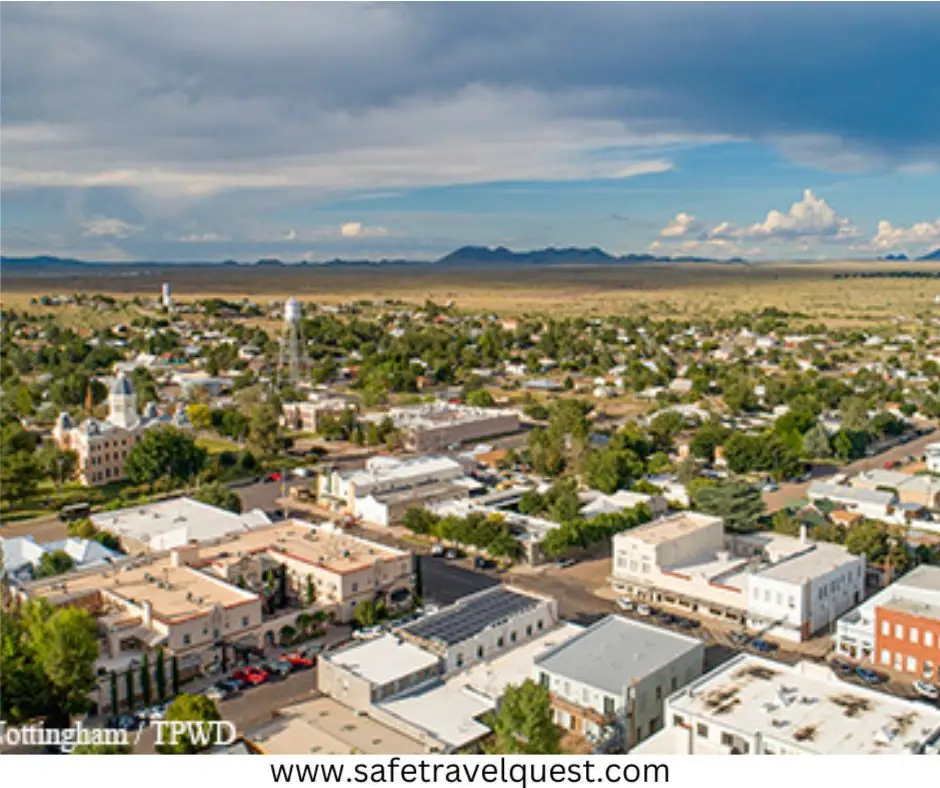
The desert here is part of the Trans-Pecos region, a high-desert landscape with broad plains and mountain ranges on the horizon. You drive through open ranch country rather than built-up suburbs. That is why West Texas road safety feels a bit different to city driving.
Two main highways connect the area:
- US-67 / US-90, carrying most of the through traffic between Marfa, Alpine, and beyond.(TxDOT US-67 Corridor)
- TX-118 (State Highway 118), a longer route that links Big Bend National Park with Alpine and then continues north through the mountains.(SH 118 – Wikipedia)
This route is popular with Big Bend visitors, art travelers staying in Marfa, and people moving between regional hubs. The drive is simple. The sense of space is what stays with you.
The Main Routes From Marfa to Alpine
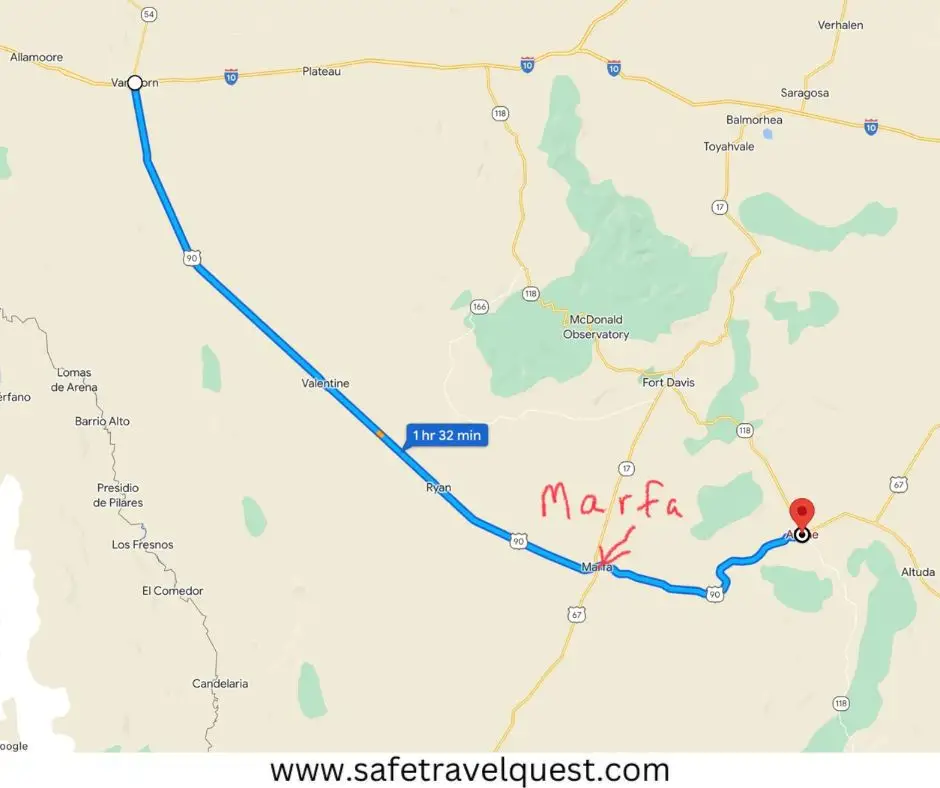
There are two realistic ways to drive between Marfa and Alpine. Both are paved and maintained. Each has its own character.
US-67 / US-90 Eastbound (Marfa to Alpine)
This is the primary route most people use. Official distance tools list it at roughly 26 miles and about half an hour of driving.(Distance-Cities) In this stretch, US-90 and US-67 run together, forming a straightforward eastbound link between the towns.
The road rolls gently through desert grassland and low hills. Curves are mild and predictable. The scenery is wide open, with long views to the horizon and very few roadside distractions. According to the Texas Department of Transportation, this corridor serves Marfa, Alpine, Presidio, and is a key link toward Big Bend National Park and other regional attractions.(TxDOT US-67 Corridor)
Traffic is light by most standards. You may share the highway with local drivers, long-haul trucks, and the occasional tourist caravan, but rarely in heavy numbers. There is no roadway lighting between towns, so at night the road is dark except for vehicle headlights.
TX-118 Northbound / Southbound
State Highway 118 is a scenic north–south highway that passes through Big Bend National Park, Study Butte, Alpine, Fort Davis, and beyond.(SH 118 – Wikipedia) It is a two-lane road through desert and mountains, known for its views and changing elevations. As a whole, SH 118 makes up part of the Texas Mountain Trail and is considered one of the region’s classic drives.(Day Trippin’ Texas)
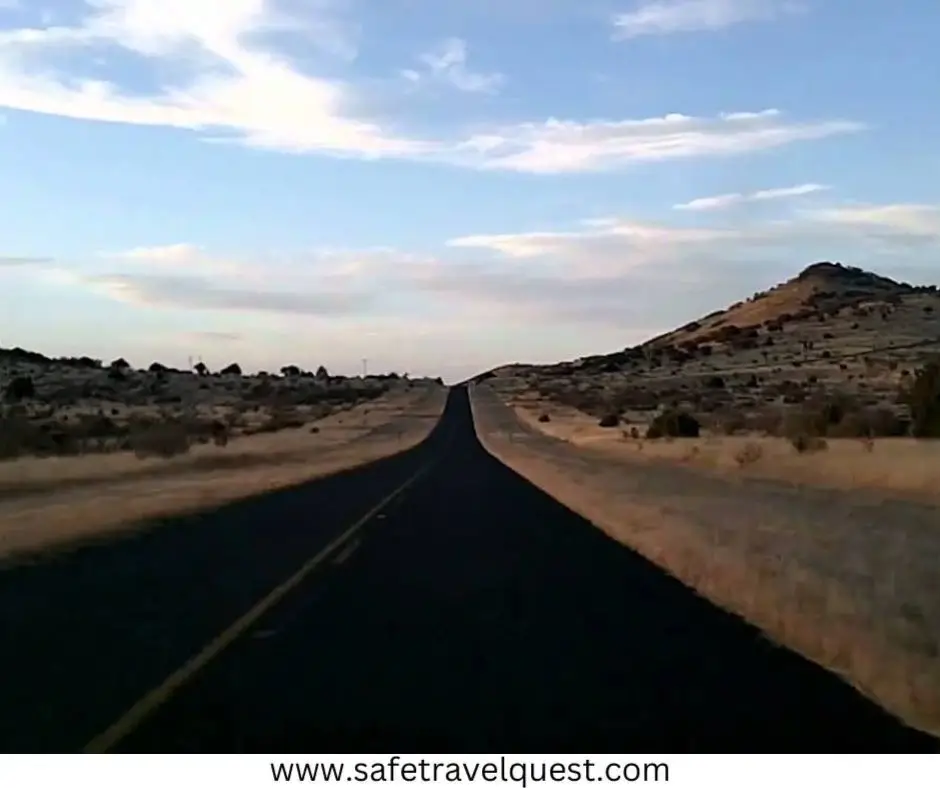
Between Marfa and Alpine, SH 118 is less commonly used as the direct route than US-67 / US-90. It can come into play if you are approaching from Big Bend or Fort Davis and connecting via Alpine. In those segments you experience more curves, more elevation changes, and a stronger sense of isolation than on the main Marfa–Alpine highway.
Both routes are safe in normal conditions. The difference lies in traffic levels, road geometry, and how remote you want to feel.
Safest Routes During the Day
During daylight hours, both US-67 / US-90 and segments of TX-118 are manageable and generally pleasant. For most travelers, though, the best route from Marfa to Alpine in the day is the direct US-67 / US-90 corridor.
Daytime safety advantages include:
- Excellent visibility – Long, straight sections let you see far ahead.
- Simple navigation – Once you leave Marfa, you essentially follow the same road into Alpine.
- Slightly more traffic – Not crowded, but you see enough vehicles to feel that you are not alone.
The landscape is open and uncluttered. You see grass, low shrubs, distant hills, and sky. There are no complex interchanges or confusing junctions. Most drivers settle into a comfortable pace and let the scenery roll by.
Still, there are a few daytime hazards to respect:
- Glare from the sun, especially in late morning or late afternoon.
- Heat radiating from the road surface in summer, which can tire you more quickly.
- Occasional wildlife near the shoulders, especially in spring and fall.
- Possible construction zones, especially on SH 118 near Alpine, where Texas Department of Transportation has announced improvement projects into 2025.(TxDOT SH118 Construction)
If you prefer a quieter drive with more variety, SH 118 offers beautiful views and a slightly more winding experience. But for straightforward daytime safety, US-67 / US-90 remains the most comfortable choice between Marfa and Alpine.
Read:Top 5 Things to do in Marfa Texas and Travel Guide
Safest Route at Night
As night falls, West Texas changes mood. The sky fills with stars. Town lights fade quickly as you leave the city limits. On this stretch, there are no streetlights between Marfa and Alpine, so your headlamps are your only guide.
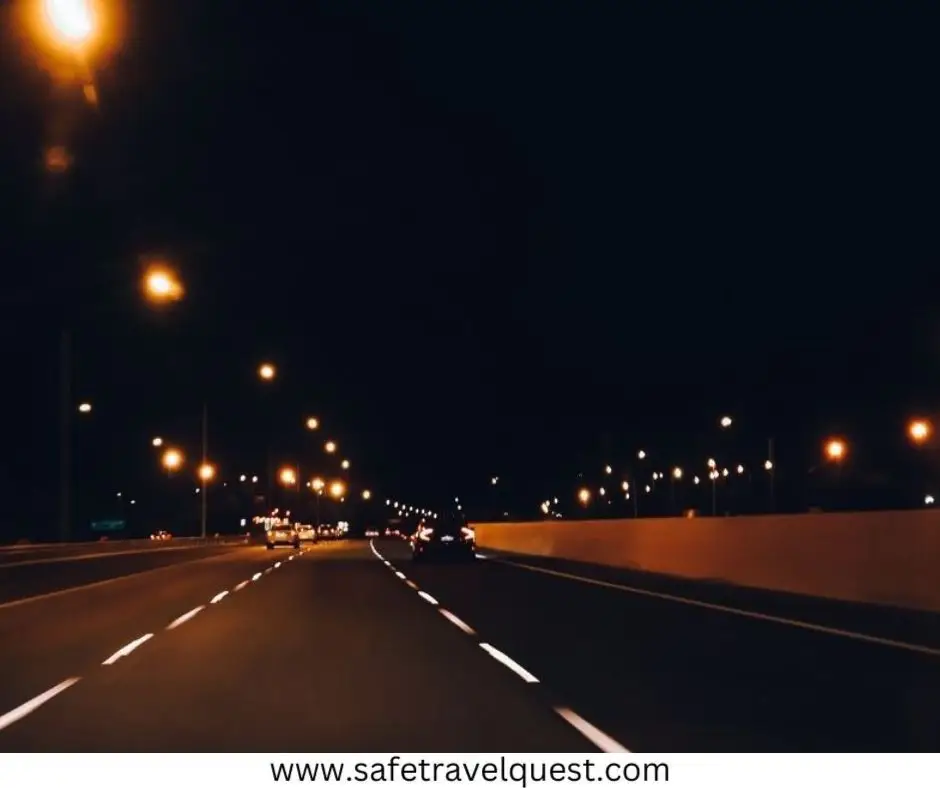
For Marfa to Alpine night driving, the most reassuring choice is again the US-67 / US-90 corridor.
Here is why it tends to feel safer:
- Predictable geometry – Mostly gentle curves and long straight stretches.
- Open sightlines – Your headlights reach farther ahead in open terrain.
- More familiar route – It is the road most drivers expect and know.
Night driving in West Texas brings a few common concerns:
Wildlife
Desert wildlife is most active at dusk and during the night. Deer, javelinas, and other animals sometimes cross the highway with little warning. Safety groups recommend slowing down in wildlife-heavy areas, scanning road shoulders, and using high beams when safe to do so.(Watch Out for Wildlife Tip Sheet) In the broader region, state wildlife officials have noted an increase in black bear movements near Alpine and along highways, including a fatal bear–vehicle collision on TX-118 south of town.(Houston Chronicle – Bear Collision)
Low Light
With no streetlighting, your world shrinks to the reach of your headlights. Articles on safe night driving stress reducing speed, managing glare from oncoming vehicles, and maintaining distance so you have time to react.(Texas Night Driving Tips)
Limited Services
Gas stations, restaurants, and stores are limited in the region. Between Marfa and Alpine, you should not expect services on the road itself. Start your night drive with enough fuel and water to cover both the distance and any unexpected delays.
TX-118 is also safe to drive at night when conditions are good, but it can feel more remote, with fewer cars to share the road and, in some stretches, more curves and elevation changes. For most visitors, US-67 / US-90 is the calmer choice after dark.
Read:Marfa Lights Explained: The Mysterious Glow in the Desert
What Travelers Usually Experience
Most drivers report that the road between Marfa and Alpine feels calm, almost meditative. The pavement is paved and generally in good condition. Lane markings are clear. You will probably see a small number of vehicles moving steadily in each direction.
By day, the highway feels airy and wide. You might notice dust devils in the distance, trains on the horizon, or cloud shadows sliding over the hills. The sense of space can be surprising if you are used to busy urban interstates.
At night, the main impressions are silence and darkness. In many spots, you look out your side window and see only faint outlines of land against the sky. Your headlights carve a clean tunnel of light ahead. You may go several minutes without seeing another vehicle. For some travelers, that feels peaceful. For others, it takes a little getting used to.
Safety concerns tend to be more about unfamiliarity than real danger. The road has a normal crash record for a rural corridor and is important enough that TxDOT has invested in a long-term corridor master plan to improve safety along US-67 in the region.(TxDOT US-67 Corridor) Local reporting has mentioned some serious accidents along US-67 in the wider area, especially on curvier segments near Paisano Pass between Marfa and Presidio, but the short Marfa–Alpine stretch is comparatively straightforward.(Big Bend Sentinel – US67 Safety)
Safety Tips for Daytime Driving
Daytime driving between Marfa and Alpine is simple, but a few habits keep it smoother and safer.
Plan fuel and water
Even though the distance is short, start with enough gas to be comfortable. There are stations in both Marfa and Alpine, but none between. Carry drinking water for everyone in the car, especially in warmer months. West Texas desert driving guides consistently emphasize hydration and readiness as key elements of safety.(Texas Desert Safety Tips)
Protect yourself from sun and fatigue
Wear sunglasses to cut glare. The sun can sit low and directly in your line of sight. If possible, avoid driving long distances at the time of day when you feel most tired, as the steady horizon and engine sound can make you drowsy.
Use shoulders wisely
If you need to stop, look for a wide shoulder or safe pull-off area. Signal early and pull fully off the travel lane. The shoulders on US-67 / US-90 tend to be adequate but not expansive.
Navigation and signal
Cell signal is usually present but can have weak patches. Download an offline map or confirm the route while you are still in town. The drive itself is simple, but having a map on hand adds peace of mind.
Safety Tips for Night Driving
Nighttime requires a slightly different mindset.
Headlight discipline
Use your high beams when there is no oncoming traffic to maximize your view. Switch back to low beams as soon as another vehicle approaches. Night driving advice from Texas highway safety sources emphasizes that reduced visibility and wildlife risk make speed control and good headlight use essential.(Texas Night Driving Tips)
Speed management
You do not need to crawl, but it helps to drive a bit below the posted limit, especially in sections where wildlife might cross. Slower speeds give you more time to respond to unexpected movement in the beam of your lights.
Watch for animals
Scan not only the road but also the edges. Watch for glints of eyes or subtle motion. Wildlife groups suggest being particularly alert near low washes, stream beds, or vegetation patches where animals may congregate.(Watch Out for Wildlife Tip Sheet)
Stick to the main highways
Avoid unpaved or little-used backroads at night unless you know them well. The direct US-67 / US-90 route between Marfa and Alpine is the most straightforward option.
Check weather and wind
If a front is moving through, high winds or blowing dust can reduce visibility and affect vehicle stability. Night can also amplify the effect of gusts because you see fewer visual cues. If winds are strong, reduce speed and keep a firm grip on the wheel.
Read:Best Restaurants in Alpine, Texas — A Local Food Guide
Weather & Seasonal Considerations
Weather shapes how the drive feels through the year.
Summer
Temperatures can become very hot during the day. The sun intensifies glare and saps energy. Vehicles can overheat if not well maintained. Desert driving safety advice highlights frequent breaks, shade where possible, and extra water during this season.(Texas Desert Safety Tips)
Autumn and Spring
These seasons often bring many of the most comfortable driving days. You may still encounter wind or occasional storms, but temperatures are usually more moderate. Afternoon thunderstorms can appear, so it is wise to keep an eye on the forecast.
Winter
Nights can become quite cold, and rare icy conditions may develop, especially overnight or early morning. If a cold front passes through, be prepared for a sharp temperature drop and potentially stronger winds.
Fog and Dust
Fog is less common here than in many wetter regions, but it can appear in valleys and low spots. Dust storms are occasional when winds are strong and soil is dry. If either limits visibility, slow down and increase following distance.
Both US-67 / US-90 and SH 118 experience similar weather patterns. In any season, matching your speed and preparation to the conditions is an important part of West Texas road safety.
Travel Essentials Before You Go
Even though the distance is short, it is wise to travel as if you might be delayed.
- Fuel – Fill up in Marfa or Alpine before you set out.
- Water – Carry more than you think you will need; dry air can dehydrate you quickly.
- Snacks – Simple food helps if you decide to pause in one town longer than planned.
- Offline maps – Download directions while on Wi-Fi or strong signal.
- Emergency basics – A flashlight, a small first-aid kit, jumper cables, and a charged phone go a long way.
- Road condition check – If you hear about construction or storms, quickly verify if any part of US-67 / US-90 or SH 118 is affected.(Navbug US-67 Alpine; TxDOT SH118 Construction)
These are the same kinds of preparations many travel resources recommend for longer Texas desert crossings, only scaled to a shorter trip.
Where to Stop, Eat, or Rest
Between Marfa and Alpine, you will not find rest areas or roadside cafés. Your stops will be at the ends of the route.
Marfa
Before leaving Marfa, you can fuel up, grab coffee or a meal, and use facilities. The town has multiple restaurants, galleries, and small shops near its central square. If you are approaching from Alpine at night, Marfa makes a natural place to rest before continuing farther west.
Alpine
Alpine is slightly larger and serves as a regional hub. It has more gas stations, grocery stores, hotels, and dining options. If you are arriving from Marfa, you may want to refuel here before heading on toward Fort Davis, Marathon, or Big Bend.
Some regional travel planners note that Alpine and Marfa are well connected by car, taxi, and occasional bus services, with typical travel times around 30 minutes.(Rome2Rio – Alpine to Marfa) No matter which direction you go, plan your longer stops in town rather than on the highway itself.
Final Thoughts
The drive between Marfa and Alpine is short, simple, and quietly beautiful. Both main routes—US-67 / US-90 and TX-118—are safe in normal conditions, especially when approached with everyday awareness and a bit of desert-specific preparation.
If you are looking for the safest routes from Marfa to Alpine, choose US-67 / US-90 during the day for its straightforward layout and wide views, and favor it again at night when its gentle curves and open sightlines feel most reassuring. TX-118 offers a more scenic mountain and desert link when you are approaching or leaving the region, especially in daylight.
With a full tank, some extra water, and an unhurried pace, this short West Texas drive becomes more than a connection between two towns. It becomes a quiet pause between art and mountains, between one stop and the next, with the desert stretching out calmly on every side.
Take your time. Watch the sky. Let the road from Marfa to Alpine be part of the journey, not just the distance between two pins on a map.

I am a passionate writer who creates engaging, creative, and meaningful content that informs, inspires, and connects with diverse audiences.