
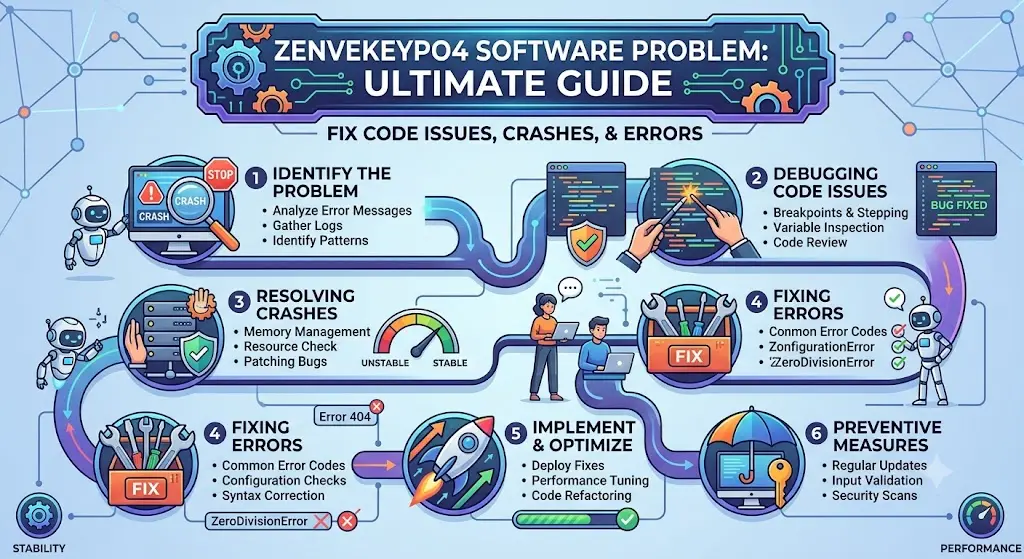
If you are facing a zenvekeypo4 software problem, you know exactly how frustrating that can be. When a program stops responding, refuses to log in, or throws mysterious error codes, it completely breaks your workflow.
Because zenvekeypo4 is a highly niche, specialized, or custom application, finding official documentation online can be incredibly difficult. Publicly available information regarding its exact architecture is limited. However, you do not need to panic. Most application glitches stem from universal operating system conflicts, corrupted caches, or network hiccups.
This comprehensive guide is designed to walk you through every common error, explain why they happen, and provide easy, step-by-step methods to get your system back up and running smoothly. Let’s dive in and fix this together!
What is Zenvekeypo4 Software?
To understand how to fix it, we first need to look at what this type of application does. While there is little public documentation out there for zenvekeypo4, it behaves like many specialized enterprise, productivity, or utility tools. These programs are built to handle specific tasks, manage local databases, or connect to remote servers to process information.
Because it relies heavily on your computer’s system files, memory, and internet connection, any small change in your operating system can cause an unexpected ripple effect. Whether you use it for personal projects or daily business operations, it needs a stable environment to perform its best.
What Does “Zenvekeypo4 Software Problem” Mean?
When people talk about a zenvekeypo4 software problem, they are usually referring to a breakdown in communication between the application and your computer. It means the software has encountered a roadblock it does not know how to bypass.
This could manifest as a zenvekeypo4 error code during startup, an application not responding to a message, or a complete system freeze. In simple terms, your computer and the software are having a misunderstanding. Our goal with troubleshooting is to clear up that misunderstanding so they can work together again.
Common Zenvekeypo4 Software Problems
Software issues come in many shapes and sizes. Let’s break down the most common problems users experience so you can identify exactly what is happening on your screen.
Software Won’t Open
You double-click the icon, the loading mouse wheel spins for a second, and then… nothing. When the program refuses to launch entirely, it usually means a background process is stuck or a critical startup file has gone missing.
Installation Failed
Seeing a software installation failed message right out of the gate is incredibly annoying. This typically happens when the installer package is corrupted during download or your system lacks the correct permissions to write new files to the hard drive.
Login Issue
If you enter your username and password only to see an endless spinning wheel or an “incorrect credentials” error despite knowing your password is correct, you are dealing with a login bug. This is almost always caused by a server-side disruption or an out-of-sync local profile.
Loading Forever
Also known as the “infinite loading screen,” this issue happens when the application opens but gets stuck on the splash page. It is usually trying to fetch data from a database or internet server that isn’t talking back fast enough.
Software Keeps Crashing
A sudden zenvekeypo4 crash that closes the program without warning is a major headache. Crashes are often triggered by memory leaks, conflicting background applications, or outdated device drivers.
Update Problem
When a new patch drops, you want it installed quickly. But a zenvekeypo4 update problem can trap you in a loop where the update downloads, fails to install, and tries to download all over again.
License Activation Error
Without proper validation, many specialized tools will lock you out. Activation errors usually occur when the software cannot verify your license key with its authentication servers, often due to strict firewall settings.
Black Screen
Opening an application only to be greeted by a completely blank, black window points directly to a graphical rendering issue. The software is running, but your graphics card isn’t displaying the visual elements properly.
Performance Issue
Is the program running painfully slow? Lag, stuttering, and delayed button clicks mean the software is hogging too many system resources like CPU or RAM, or it is struggling to read data from your hard disk.
Error Messages
Random pop-up windows filled with complex numbers and letters are your system’s cry for help. These zenvekeypo4 common errors are actually clues that tell you exactly which file or registry entry is misbehaving.
Compatibility Issue
If you recently upgraded your operating system (like moving to a new version of Windows or macOS), older software might struggle to keep up. Compatibility issues happen when the code inside the app is too old for the new operating system.
Sync Problem
For tools that save your work to the cloud, a sync failure means your local changes aren’t uploading. This puts you at risk of losing recent progress if you switch computers.
Missing Files
Sometimes, an antivirus program or an accidental deletion sweeps away a critical .dll or configuration file. Without it, the application simply cannot function.
Corrupted Data
If your computer loses power or shuts down unexpectedly while the program is saving data, the underlying files can become scrambled. Corrupted data will cause the app to behave erratically or refuse to load specific profiles.
Network Issue
Many modern programs require a continuous internet connection. A minor drop in your Wi-Fi signal or an overprotective local network can cause the software to drop its connection and display offline errors.
Quick Fix
If the program is frozen and won’t respond to anything you click, press Ctrl + Shift + Esc (Windows) or Cmd + Option + Esc (Mac) to pull up your force quit menu. Highlight the software, click End Task, and try launching it again. This forces a clean slate without restarting your entire machine.
Why These Problems Happen
Understanding the root cause of an issue makes it much easier to prevent in the future. Here are the most common reasons why a zenvekeypo4 not working scenario occurs:
- Outdated Operating System Files: If your computer is missing important system patches, it might lack the framework required to run the software stably.
- Corrupted System Cache: Temporary files can pile up over time. When these files become corrupted, they confuse the software.
- Antivirus Overinterference: Security software is great, but it can be overly suspicious. It will often block completely safe programs from accessing the internet or editing local files.
- Driver Mismatches: Your graphics card and motherboard rely on drivers to talk to software. Outdated drivers are a leading cause of unexpected application crashes.
- Corrupted Installation Files: A brief hiccup in your internet connection while downloading the program can corrupt the setup files, leading to an zenvekeypo4 installation issue.
Signs Your Software Has a Serious Problem
How do you know if your issue is a simple glitch or something that requires a deep dive? Keep an eye out for these red flag symptoms:
- Consistent System-Wide Freezes: If launching the application crashes your entire computer (causing a Blue Screen of Death or a total hard lock), the issue is affecting deep system layers.
- Repeated File Corruption: If the software repeatedly corrupts your saved projects or settings every time you close it, there is a fundamental conflict with your storage drive.
- Error Loops That Persist After Reinstallation: If you completely wipe the program and reinstall it, but the exact same error code returns instantly, the root cause lies somewhere else in your operating system environment.
How to Fix Zenvekeypo4 Software Problem
When you need a reliable software repair guide, executing steps in the right order saves massive amounts of time. Follow this detailed, step-by-step zenvekeypo4 troubleshooting framework to eliminate problems one by one.
Restart Device
It sounds incredibly simple, but restarting your computer fixes an astonishing number of software problems. Over time, your system’s temporary memory (RAM) becomes cluttered with remnants of closed programs. A fresh reboot completely clears this memory, terminates hidden runaway background processes, and gives the application a clean environment to start in.
Check Internet
Many application issues are actually hidden connectivity problems. If the software needs to validate a license, fetch cloud data, or download an update, a weak internet connection will cause it to hang.
- Disconnect from your Wi-Fi and reconnect.
- Try switching to a wired Ethernet cable if possible.
- Run a quick speed test online to ensure your ping isn’t excessively high.
Update Software
Running an old version of an app is an open invitation for bugs. Developers constantly release updates to patch security vulnerabilities and fix known glitches. Look inside the program’s settings menu for a “Check for Updates” button. If the program won’t open, visit the source where you originally obtained the software to download the latest available version patch.
Update Drivers
Your graphics card and hardware components need up-to-date drivers to render software windows correctly. Outdated display drivers frequently cause black screens and crashes.
- On Windows, right-click the Start menu and select Device Manager.
- Expand the Display adapters section.
- Right-click your graphics card and select Update driver.
- Choose Search automatically for drivers and follow the prompts.
Run as Administrator
Sometimes, an application needs deep access to your hard drive to read specific files, but your operating system blocks it out of caution. Giving the program administrative privileges can immediately bypass this roadblock.
Pro Tip
To always run the program with elevated privileges on Windows, right-click the software shortcut icon, select Properties, click over to the Compatibility tab, check the box next to Run this program as an administrator, and hit Apply.
Clear Cache
Applications store temporary data in a cache folder to load faster. If one of those cached files gets corrupted, the whole system can break down.
- For Windows users: Press Windows Key + R, type %localappdata% into the box, and press Enter. Look for a folder named after your software, open it, and safely delete the temporary or cache folders inside.
- For Mac users: Open Finder, click Go in the top menu bar, select Go to Folder, type ~/Library/Caches, and clear out the application’s specific folder.
Repair Installation
You don’t always have to completely delete a program to fix its broken files. Many modern platforms offer a built-in repair system that scans your local directories against a master file list and replaces only the broken pieces.
- Open your computer’s Control Panel and head to Programs and Features.
- Locate the software in the list.
- Click on it and check if a Repair or Change option appears at the top of the list.
- Click it and let the system verify its internal files.
Reinstall Software
If a standard repair doesn’t do the trick, a total clean reinstallation is your next best option. This ensures that every single configuration file, registry key, and temporary folder is wiped away so you can start completely fresh.
- Uninstall the app via your system’s settings menu.
- Restart your computer to clear out any lingering system hooks.
- Download a fresh installer package.
- Run the installer to perform a clean setup.
Disable Antivirus Temporarily
Security suites can occasionally misidentify benign code as a threat. If your software won’t open or gives you an installation error, try turning off your real-time antivirus shielding for 10 minutes. If the software works perfectly while the antivirus is off, you simply need to add the software to your antivirus “Exclusions” or “White List” so it stops getting blocked.
Warning
Never leave your antivirus permanently disabled. Once you finish testing the software, immediately turn your security protection back on to keep your machine safe from web threats.
Check System Requirements
If your hardware doesn’t meet the minimum specifications required by the application, no amount of troubleshooting will make it run smoothly. Check your computer’s RAM, CPU speed, and available storage space to make sure it matches what the software demands. If your machine is underpowered, it can trigger regular performance lag and sudden crashes.
Scan for Malware
Deep-seated computer viruses can hijack system resources and corrupt core shared libraries (like .dll files) that your software relies on. Run a full deep system scan using Windows Defender or a trusted third-party security tool like Malwarebytes to ensure your operating system is completely clean.
Check Windows Updates
An outdated operating system can introduce major stability issues for newer applications. Make sure your computer is fully up to date by navigating to Settings, clicking Update & Security, and selecting Check for updates. Install any pending framework updates or cumulative patches.
Restore Previous Version
If your software was working perfectly yesterday but broke completely today after an automatic system change, you can utilize a System Restore point. This rolls your computer’s internal system files back to a previous state in time without touching your personal photos, documents, or videos.
Contact Official Support
When you have exhausted every single local fix, it is time to call in the professionals. Reach out directly to the official development team or IT helpdesk responsible for the application. When submitting a request for zenvekeypo4 software support, make sure to copy down the exact error messages you received and list out the troubleshooting steps you have already tried.
Quick Troubleshooting Table
When you are short on time, you just want a map that points you in the right direction. Use this quick reference chart to diagnose your issue at a glance.
| Problem | Possible Cause | Best Solution |
| Software won’t launch | Stuck background process or corrupt shortcut | Force quit via Task Manager, then run as Administrator |
| Installation failed | Missing folder permissions or corrupt download | Redownload the installer package; temporarily disable antivirus |
| Login error / Infinite wheel | Local network block or server outage | Check internet connection; clear the application cache folders |
| Frequent software crashes | Outdated graphics card or chipset drivers | Update your device drivers and install pending Windows updates |
| License activation failure | Local firewall blocking authentication server | Add the program to your Windows Firewall exception list |
| Completely black screen | Display rendering conflict with hardware | Disable hardware acceleration in settings or update GPU drivers |
Advanced Fixes
If basic troubleshooting didn’t solve the issue, it is time to roll up our sleeves and explore deeper system settings. These steps require a bit more precision, so take your time and follow the directions carefully.
Using the System File Checker (SFC)
Sometimes, the issue isn’t the software itself; it’s a corrupted core Windows file that the software relies on. Windows has a fantastic built-in tool called the System File Checker that automatically scans and repairs broken system structures.
- Type cmd into your Windows search bar.
- Right-click Command Prompt and select Run as administrator.
- Type the following command exactly as shown and press Enter:
Plaintext
sfc /scannow
- Do not close the window until the verification process hits 100%. If it finds corrupted files, Windows will repair them automatically. Restart your machine afterwards.
Modifying Compatibility Settings
If the program was built for an older architecture, modern operating systems can struggle to process its commands. You can trick the app into thinking it is running on an older version of Windows.
- Right-click the application icon and choose Properties.
- Click the Compatibility tab.
- Check the box labeled Run this program in compatibility mode for:.
- Select Windows 8 or Windows 7 from the drop-down menu.
- Click Apply and test the program.
Windows-Specific Solutions
Windows relies heavily on background frameworks called .NET Framework and Visual C++ Redistributables. If these underlying components become corrupted, any application built on top of them will crash immediately.
- Repair .NET Framework: Download the official Microsoft .NET Framework Repair Tool from the Microsoft website. Run the tool to automatically detect and patch issues within your runtime environment.
- Reinstall Visual C++ Packages: Go to your Control Panel, locate the various Microsoft Visual C++ Redistributable installations, click change, and choose Repair. Alternatively, download the latest combined package directly from Microsoft’s official support catalog.
Mac-Specific Solutions
If you happen to be running this application inside a macOS environment (or through a virtual compatibility layer like Wine or Parallels), the operating system’s strict security protocols can sometimes cause a lockdown.
- Reset App Permissions: Open your Mac’s System Settings, click over to Privacy & Security, and navigate down to Files and Folders. Make sure the application has explicit permission to access your local drives.
- Fix Broken Disk Permissions: Launch the built-in Mac Disk Utility tool (found via Spotlight search), select your primary startup hard drive, click the First Aid icon at the top of the menu, and select Run. This scans your entire file system structure for permission errors and repairs them instantly.
How to Prevent Future Software Problems
The absolute best way to handle a software issue is to make sure it never happens in the first place! Incorporating these quick, proactive habits into your routine will keep your workspace running smoothly year-round.
- Create Regular Backup Points: Before installing any new software updates or making major system modifications, manually create a Windows System Restore point. If anything goes sideways, you can instantly reverse the clock.
- Keep Your Storage Clean: Avoid letting your primary storage drive fill up completely. Operating systems require at least 10% to 15% of free space just to shuffle around temporary virtual memory files.
- Close Apps Properly: Never pull your computer’s power plug or hold down the physical power button to shut down unless your machine is completely frozen. Closing applications properly through their menus ensures that all saved files are closed cleanly and prevents data corruption.
Best Practices for Smooth Performance
Want your applications to perform lightning-fast? Follow these industry-standard optimization tips:
- Invest in an SSD: If you are still running your computer off an old-school mechanical Hard Disk Drive (HDD), upgrading to a Solid State Drive (SSD) will completely transform your performance. Software will open in seconds rather than minutes.
- Limit Startup Applications: Many applications sneakily set themselves to open automatically the moment you boot your computer. This drains precious CPU power before you even start working. Open your Task Manager, click the Startup tab, and disable any programs you don’t need immediately.
- Run Defragmentation (HDDs only): If you use an older mechanical drive, running the built-in Windows Defragment and Optimize Drives utility once a month rearranges scrambled data fragments so your drive head can read files much faster.
Mistakes to Avoid
When things go wrong, it is easy to make quick decisions out of frustration that can accidentally make the problem much worse. Avoid these common traps:
- Downloading Missing Files From Random Websites: If you get an error saying a specific .dll file is missing, never download that single file from a random third-party website. Those files are frequently laced with malware or viruses. Instead, always reinstall the entire application or runtime framework from official sources.
- Registry Cleaning Without a Backup: Avoid using automated third-party “registry cleaners.” Deleting the wrong key in your Windows Registry can permanently break your operating system, forcing you to completely reinstall Windows.
- Ignoring Error Messages: When a program displays an error code, don’t just click “OK” and ignore it. Take a quick screenshot or write down the code. Those specific strings are the key to finding a rapid solution.
Frequently Asked Questions (FAQ)
Why is Zenvekeypo4 software not opening?
This usually happens because a previous session of the program is still quietly running invisibly in your computer’s background memory. Open your system’s Task Manager, look for any lingering tasks associated with the application, terminate them completely, and try relaunching the application.
How do I reinstall Zenvekeypo4 software?
First, completely uninstall the application through your computer’s Apps & Features settings panel. Once uninstalled, restart your device to clear out temporary background folders. Finally, locate your original download package or setup file, right-click it, and select Run as administrator to install a fresh copy.
Is Zenvekeypo4 software safe?
As long as you obtained the software package from a trusted, official source or an approved internal company network, it is perfectly safe to use. To ensure absolute safety, avoid downloading installer packages from unauthorized third-party file-sharing blogs or forums.
Why does Zenvekeypo4 keep crashing?
Frequent app crashes are typically triggered by hardware driver conflicts (especially outdated graphics card drivers), a lack of available system RAM, or overprotective third-party antivirus software blocking the application from modifying its local database files.
Can antivirus block Zenvekeypo4?
Yes, modern antivirus applications use aggressive detection algorithms that can easily mistake specialized custom utility tools for potential security threats. If your program is getting blocked, add its primary execution folder to your antivirus software’s safe exclusions list.
How do I fix update errors?
If an update gets permanently stuck or fails halfway through, your local update temp folder is likely corrupted. Close the app, clear out your local temporary system files, verify your internet connection is completely stable, and try running the update sequence again.
Does reinstalling delete data?
Performing a standard reinstallation will completely refresh the application’s core operating files, but it rarely deletes your personal project files or saves. However, to be completely safe, it is always smart practice to manually copy your critical data folders to a thumb drive or cloud backup before uninstalling.
Why is the software slow?
Slow performance and heavy interface lag usually indicate that your computer is running dangerously low on physical memory (RAM) or your hard drive is heavily fragmented. Try closing down heavy background browser tabs (like Chrome) to free up system resources.
What causes activation errors?
Activation errors mean the software is attempting to dial home to its authentication server to verify your license code but the connection is failing. This can be caused by a temporary server outage on the developer’s side or a local firewall blocking outbound connections.
How can I contact support?
Since public web documentation for zenvekeypo4 is very limited, you will need to look inside the application’s installation folder for a help file (help.txt or readme.html) or reach out directly to the specific technical team or administrator within your organization who deployed the tool.
Final Thoughts
Dealing with a stubborn zenvekeypo4 software problem can definitely test your patience, but you don’t need to be a professional computer scientist to get it sorted out. In the vast majority of cases, the solution lies in a simple, foundational fix—like running a clean reinstallation, clearing out a cluttered local cache folder, or updating your graphics card drivers.
Before you spend hours waiting on hold for a tech support representative or paying expensive repair fees to a computer technician, take a deep breath and work your way systematically through the troubleshooting steps outlined in this guide. Nine times out of ten, taking an orderly approach to the problem will clear up the glitch and get your digital workspace back to normal in no time. Good luck, and happy troubleshooting!

I am a passionate writer who creates engaging, creative, and meaningful content that informs, inspires, and connects with diverse audiences.