
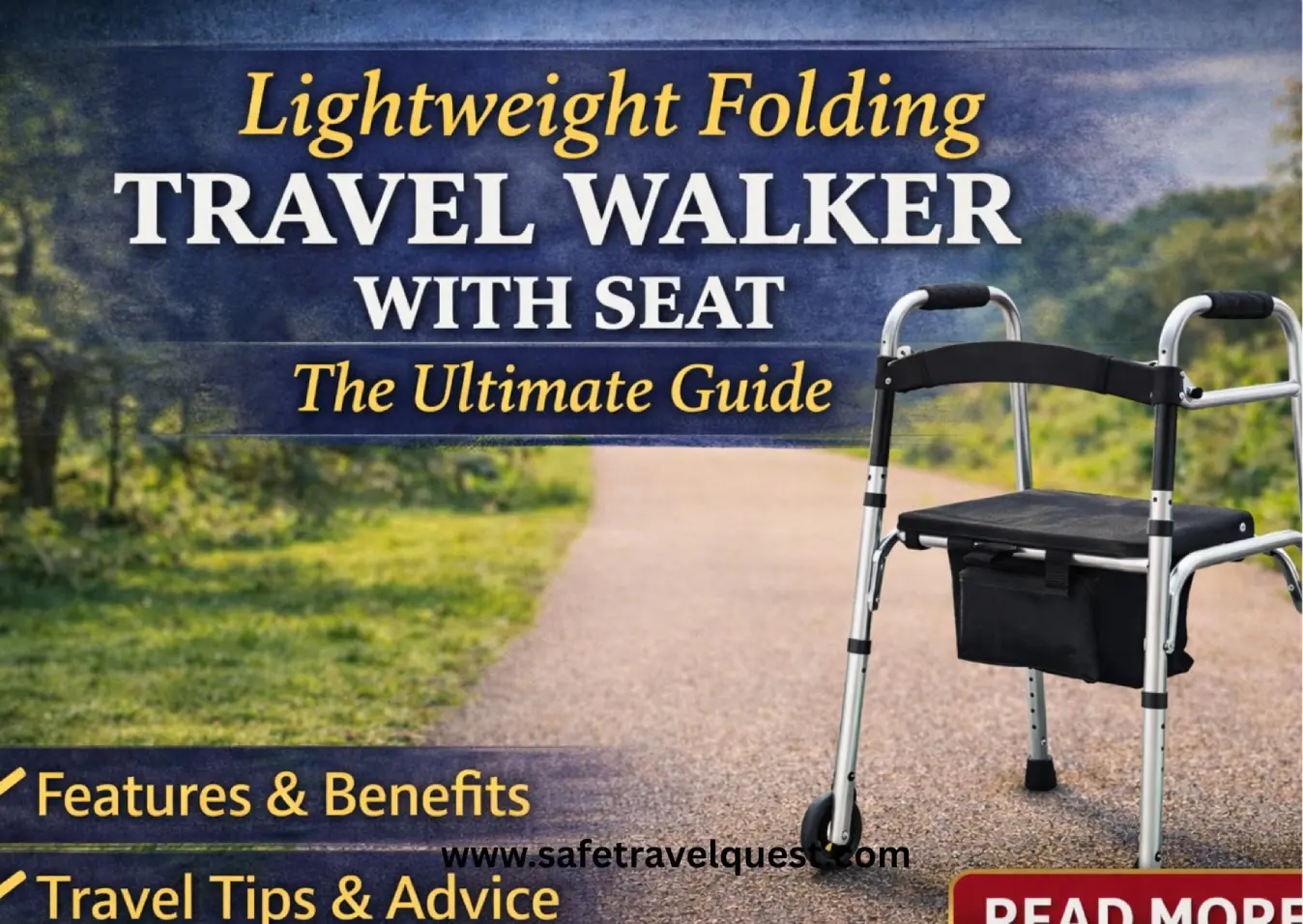
A lightweight folding travel walker with seat also known as a lightweight folding walking chair is a special mobility assisting device that offers stability and a comfortable place to rest anywhere one goes. These models have a compact foldable frame unlike those of the traditional walkers, which are designed specifically to be transported easily in vehicles, aircraft, and in railway transport. They usually fill in the gap that exists between a normal walker and a rollator providing both structural support and portable comfort to those who may wish to live an active lifestyle.
The selection of these gadgets by many travelers is due to the fact that they enable them to overcome one of the most frequent obstacles: the necessity to have a good backup on long walks and the fact that they get tired. When walking to an airport terminal, sightseeing in a new city, or visiting relatives, the inbuilt seat makes sure that one can always rest, even in cases where no bench can be found. This guide will discuss the key characteristics, safety measures and valuable tips on how to pick a walker that will suit your particular needs during the traveling experience.
What is a Lightweight Folding travelling seat walker?
A folding travel seat walker is a mobility aid that places greater emphasis on style rather than on its functionality. Whereas a typical walker can be designed with a rigid frame that might or might not have a seat, purpose-specific ones are manufactured with lightweight materials such as aircraft-grade aluminum or carbon fiber. These used materials enable the device to be strong enough to provide weight support to a person yet light enough to be moved into a trunk or overhead bin.
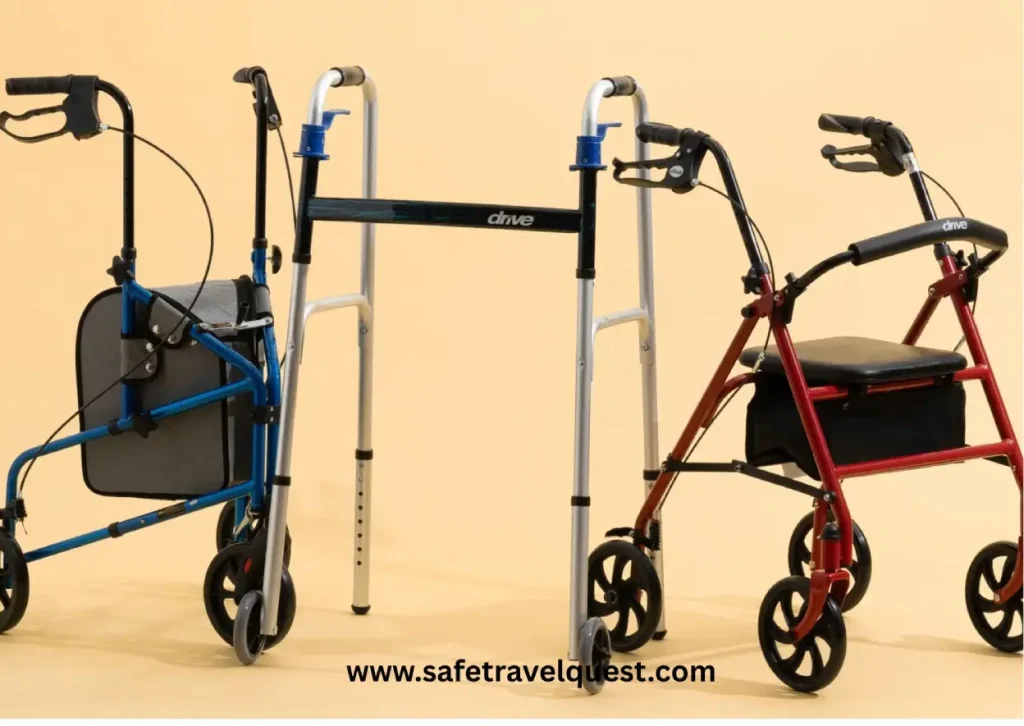
Majority of them are classified under the heading of rollators- four-wheel, hand braked, seat-equipped walkers. They are used in those cases when people still can walk but have problems with balance or stamina. The main distinction over a normal medical walker is that there is a side-to-side or compact folding mechanism to enable the walker to fold up into a significantly smaller size than an ordinary front-to-back folding frame.
Key Features to Look For
Researching a lightweight folding travel walker with seat, there are a number of features that differentiate a high-quality travel model and a regular home model:
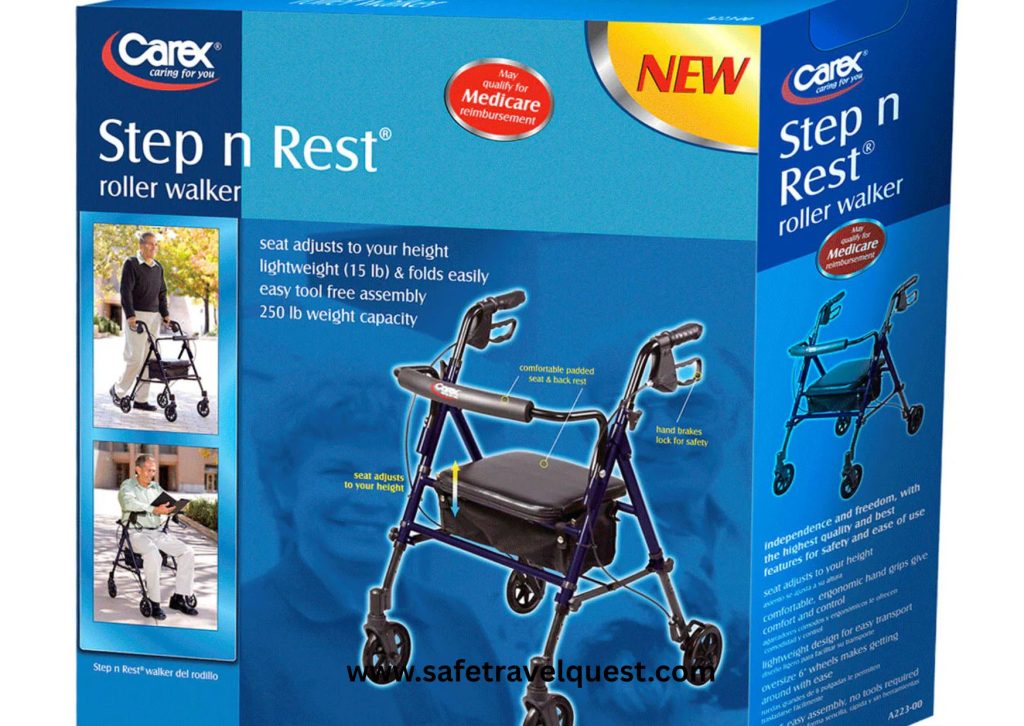
- Weight and Portability: Select between the models of 13-18 pounds. Bariatric models with heavy reinforcements can be heavy but in normal travelling, it is desirable to have ultralight frames.
- Folding Mechanism: A common fold is the side to side fold or a euro-style which is the most compact. This will enable the walker to remain standing, but in a folded position making it consummate to tuck in a corner at the restaurant or beside a seat in a bus.
- Seat Design: Make sure there is a padded seat and a backrest. Other travel models have the seat made of mesh to save weight, and other models have contoured cushions to make it more comfortable in the long run.
- Braking System: – See that the device has loop-lock hand brakes. These enable the user to drag to decelerate as well as push to fix the wheels in place so as to sit safely.
- Wheel Size: 8-inch wheels are the typical ones when it comes to travel. They are too wide to move around outdoors, and are narrow enough to manoever in the house.
why a traveler using a seat on a traveler walker
A travel walker that includes a seat has a number of operational benefits to an individual that is maneuvering within new surroundings:
- Resting Convenience: This is the nearest gain, as the seat is always available. The possibility of sitting and relaxing at any given time eliminates excessive work, especially when one has to deal with long queues in security lines or the tours of the museum.
- Greater Stability: The four-point contact of a rollator gives a stable base to the traveler who experiences a lack of stability on uneven surfaces such as gravel or in the streets of an old city.
- Transportable Facility: Travel walkers are developed to fit into small spaces. With a center strap, many can be folded with a single hand, and it is the best when you need to get in and out of the taxis.
- Small footprint: A folding walker may be folded up in small cabins of a cruise ship or in hotel rooms to ensure that walking areas remain clean and unobstructed.
Safety Considerations
Mobility equipment used outside the house is of the greatest importance to safety. Central to the core safety guidelines we propose at the site, safetravelquest.com, is to adhere to the following safety guidelines:
- Weight Capacity Limits: It is always important to ensure that the weight capacity of the walker is more than the weight of the user. The standard models normally have a capacity of up to 300 lbs although on heavy-duty models the capacity can be up to 400 lbs or even beyond.
- Brake Reliability: Use the brakes before each trip. The walker, being locked on, should not give way when you lean on it or endeavor to rest.
- Safe Sitting Practices: Always when the brakes are locked, or the walker should not be sat upon. Also, a walker with a seat is not a wheelchair, you can never have someone push you when you are on the seat because the machine is not equipped with such strength to push.
- Terrain Awareness: Although the bigger wheels are helpful, be careful on wet or icy surfaces. Lightweight walkers have an easier time sliding than the heavier steel ones in the event that the wheels lose their grip.
- Airline and Cruise Inspections: Before taking off, make sure bolts are tightened or there are no hardened wheels because the vibrations of the travelling process may sometimes determine the hardware to be loosened.
How to Choose the Right Model
It is important to note that the type of body and the type of traveling the person is engaged in determines their selection of the walker:
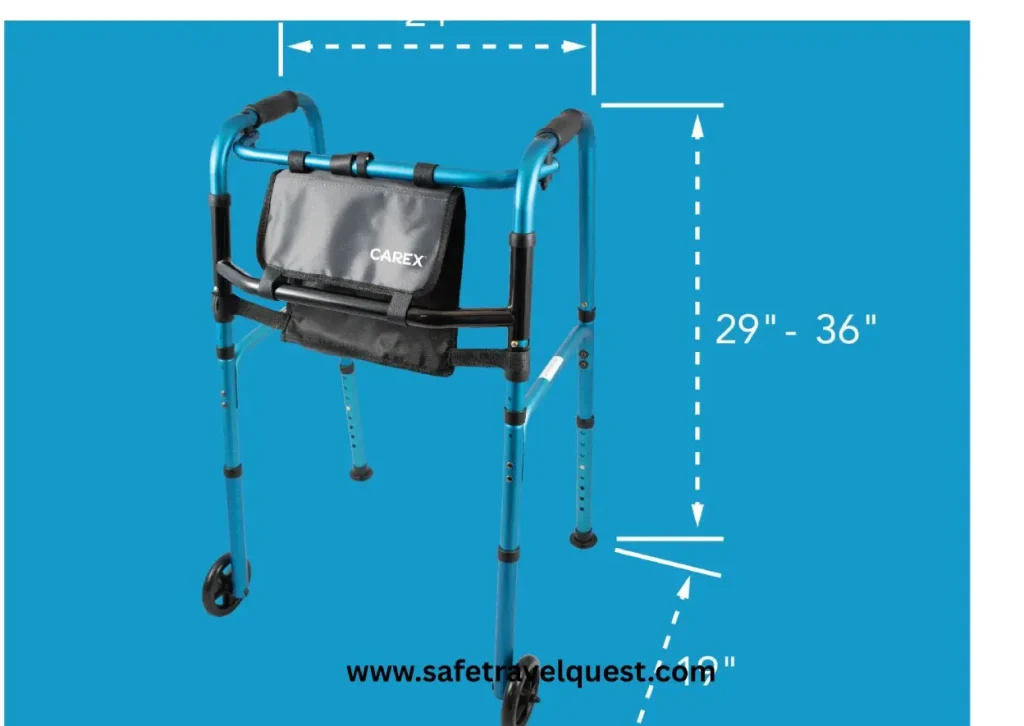
- Handle Height: This should be fitted well. The handles must be at a point with the crease of your wrist when standing in the walker with the arms positioned at your side. This will stop back bending and shoulder tension.
- Indoor vs. Outdoor: Smaller 6 inch wheels provide better maneuverability in case you will use the vehicle primarily indoor sightseeing (museums, malls). When going out to adventure (parks, European streets) 8-inch or 10-inch wheels are required.
- Travel Type: In the case of air travel, consider models that have a travel bag or those that have a lock so that the frame can be closed. In Cruises, ensure that the width of the walker can easily pass through regular door frames of the cabin size of 23 inches.
- Storage Requirements: Take into consideration whether the walker has an inbuilt basket or pouch. This way, you have space to put a bottle of water, documents and a light jacket; and you are free to use your hands to use the brakes.
Lightweight Folding Walker and Rollator Comparison.
Walker and rollator are terms that are used interchangeably but it is important to note that they differ in several ways:
| Feature | Standard Folding Walker | Folding Rollator (Travel Walker) |
| Wheels | 0 to 2 wheels | 3 to 4 wheels |
| Brakes | Mostly none | Hand-operated loop brakes |
| Seat | Almost invariably absent | Almost invariably present. |
| Movement | Lift-and-step or push | Smooth rolling |
| Best For | Weight-bearing support (post-surgery) | Balance and endurance support |
In case of travel, the so-called travel walker (also called rollator) is usually the most preferred option since it can be used to walk more naturally, and it has the resting seat missing in a typical metal walker.
Travel Considerations
To move around transportation centers, one needs certain planning:
- Airline Policies: Mobility aids carry no charge to your carry-on baggage under the Air Carrier Access Act (ACAA). You may use your walker by “gate-checking it, which means that you can use it throughout the airport and boarding.
- +1
- TSA Navigation: You may use your walker to go through the security. It will either be inspected by hand or through X-ray. In case you cannot pass through the metal detector, then the agents may offer an alternative either manual pat-down or temporary wheelchair issued by the airport.
- Cruise Ship Compatibility: The ships are accessible, although the regular cabin doors are narrower than accessible cabin doors. Check the width between the wheels of your walker to make sure that it fits.
- Public Transportation: The majority of buses or trains nowadays possess kneeling capabilities or ramps. The folding capability of your walker will ensure that aisles are clear even after you have been seated in your place.
Maintenance and Care
A walker that is well maintained is a secure walker. To maintain your device in a good condition, follow the following tips:
- Cleaning: The frame and the seat can be cleaned by means of mild soap with the help of a damp cloth. Shun hard chemicals that may destroy the plastic components.
- Hardware Check: Check every month or prior to a trip and ensure that the screws and bolts are tight. Make sure that the folding hinges are smooth and do not grind.
- Wheel Inspection: clear of hair, dirt or carpet fibers that could have become tangled in the axes of wheels. Tires should also be changed when worn out to ensure they do not lose grip.
- Brake Adjustment: The walkers have a nut that is usually adjusted around the wheel. In case there is a spongy-feeling of the brakes, then they should be tightened.
Common Mistakes Buyers Make
- Neglecting Weight Capacity: Selecting a model that is not weight tested to your weight can result in frame failure.
- Style Over Safety: A smooth looking walker is good, yet a good set of brakes and a firm seat is much needed.
- Failing to Check Folded Size: There are travel walkers that even when folded are rather large. Before buying a car, measure their trunks or check the size of airline closets.
- Leaving out Height Adjustment: A walker which is too low results in back pain and one which is too high makes the device difficult to control.
Frequently Asked Questions
Should lightweight folding walkers be permitted in aircraft?
Yes. The law of the land dictates that airlines must carry mobility aids without charge. You can take your walker to the boarding gate, where it will be checked by the staff member at the boarding gate and handed back to you at the aircraft door upon landing. Even the very small models can be packed in the overhead baggage.
What is the maximum weight of the travel walker seat supported?
The majority of light weight travel walkers are rated at 300 pounds. There are bariatric or heavy-duty models which can hold up to 400 to 500 pounds, but these are also normally a little heavier. Consistently refer to the user manual on the particular product.
Which is preferable between a rollator and a walker?
It depends on your needs. The rollator (wheeled travel walker with a seat) is more enduring, better in balance, and out of doors. Nonetheless, when you must use the device to support yourself standing on one side of the injury, then a regular non-wheeled walker is usually more stable.
Is it able to be used on rough surfaces?
Travel walkers that have 8 inch wheels are able to traverse fairly rough surfaces such as grass, gravel or cracked sidewalks. They however do not suit rugged hiking trails. Brakes should be checked before one sits and more so when on a soft surface or slope.
Is a prescription required on a travel walker?
You do not require a prescription in order to purchase one privately but you might require it in order to be reimbursed by insurance or Medicare. One of the things that we suggest that you do is to talk with a physical therapist because you may be using the wrong form of mobility aid when dealing with your condition.
Final Practical Advice
A lightweight folding travel walker with a seat is an independence investment. It can open up travel possibilities which may otherwise seem too taxing by offering a safe means of walking and a trustworthy place to sit. When purchasing a model to use, you should consider one that will be intuitive and easy to use and fold by you (or a friend).
Our advice is that the traveler should be able to test a few other models at the same time to feel the level of the brake tension and the seat height. It is important to remember that the purpose of using a mobility aid is to ensure that you are not alone on your adventure, and the initial step to a successful adventure is to select the appropriate tool.
You may also like it ….
2026 Travel Lite Rove Lite Sport 12RK Weight: A Complete Towing Guide
Prindle 16 Traveller Guide: Specs, Safety & Performance.
Health Certificate Pet Travel: Requirements and Guide 2026
Travel Threetrees VN: Brand Research and Legitimacy Guide

I am a passionate writer who creates engaging, creative, and meaningful content that informs, inspires, and connects with diverse audiences.