Do people put cb radios in travel trailers? Yes, the CB (Citizens Band) radios are still present in the setup of their travel trailers, but are nowadays installed in the tow vehicle instead of the trailer itself. Some travelers install CB radios in travel trailers for road communication. They use them to stay connected, share traffic updates, and improve safety, especially in remote areas with weak mobile signals.
Although cell phones and satellite messengers have altered the communication patterns of travelers, the CB radio will continue to be a regular part of the RVer life, where individuals travel in convoys, through long distance places with poor cell phone coverage, or those who just want to hear what the long-haul trucker is saying in a specific area.
The concept of using CB radios by traveling people has many reasons, which include practical safety concerns, and the social group travel factor. The ability to have a line of sight, radio-based communications system is a vital layer of redundancy in the time of still having death zones in the national parks and mountainous areas. This manual discusses the uses and advantages of the CB radio, safety, and technical aspects of taking on a travel trailer adventure.
Are there CB Radios in Travel Trailers?
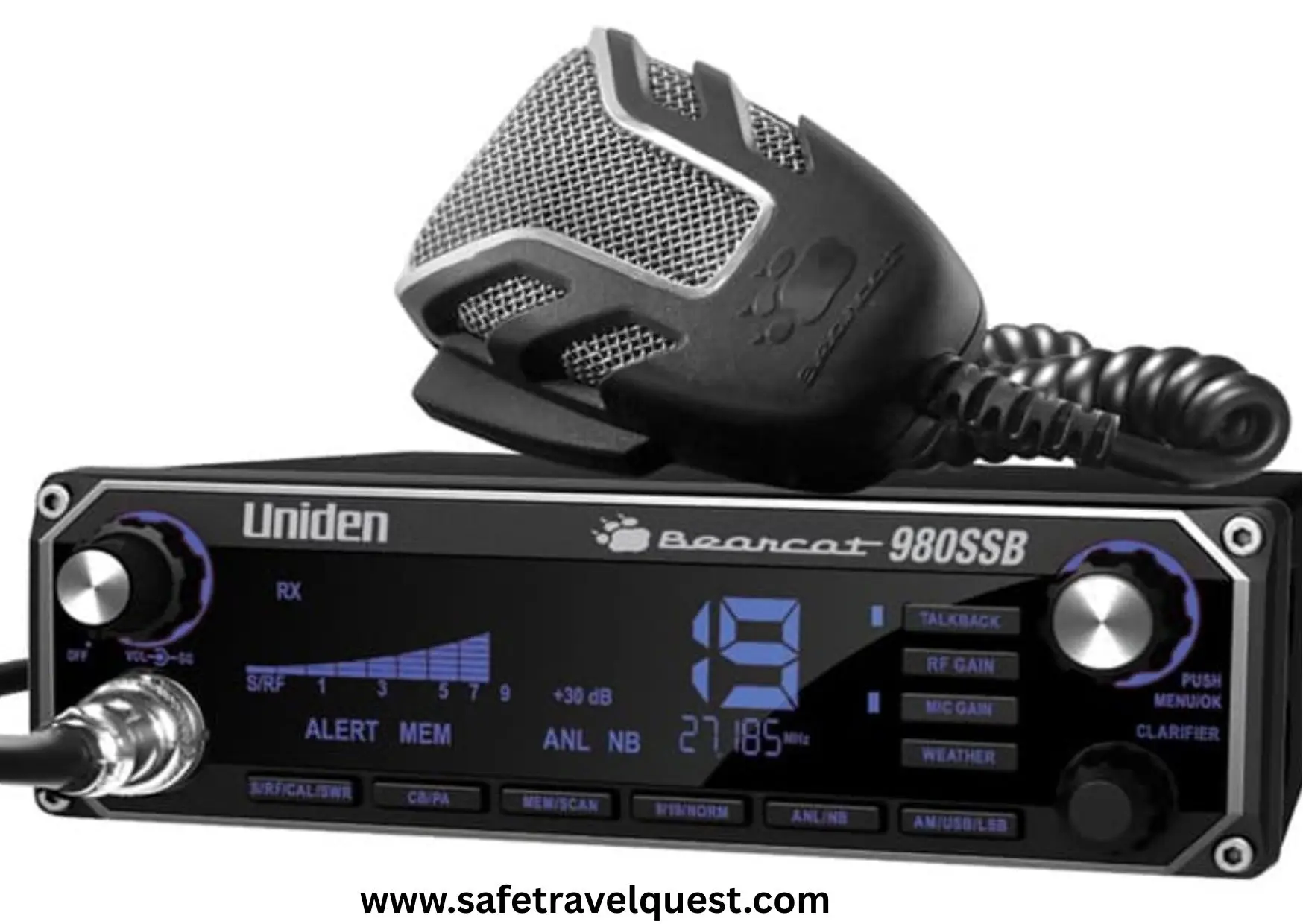
Although a CB radio mounted permanently in the living quarters of a travel trailer is less frequent, they are a huge hit among those that own the trucks and SUVs used to pull them. Most RVers will ensure that the radio is very close to the driver seat so that they can communicate instantly as the car moves.
There are however, a few long-term travelers and boondockers who install a second unit or a handheld CB in the trailer to keep in touch with their party or to check on the emergency channels when in camp.
Frequency One of the main ways the use of CB radios has dropped is since the 1970s and 80s, though it has not disappeared since then among off-roading communities and overland. Do people put cb radios in travel trailers.To the owners of large travel trailers, the CB has continued to be an effective device of listening in to the professional drivers who tell them about low clearance bridges, traffic stalls, and space at the truck stops or rest stations.
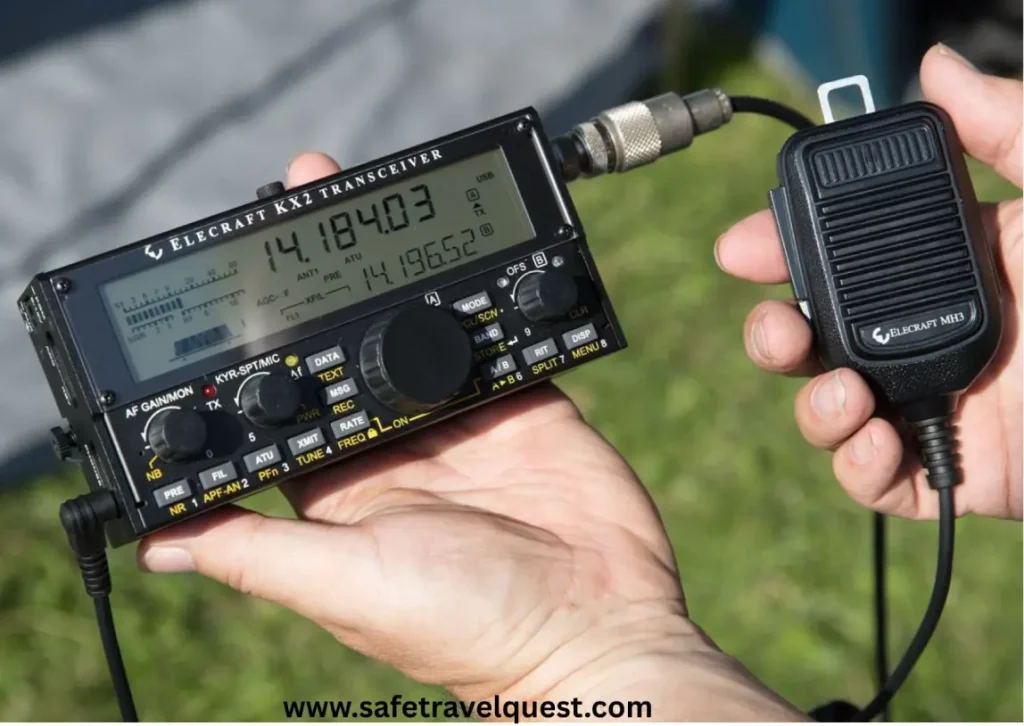
Why RV Owners Use CB Radios
There are a number of different uses of CB radios by RV owners that are not always replicated by a modern smartphone.
- Road Condition Updates: Truckers frequently make announcements about accidents, construction or debris on the road miles before you come to the hazard. To a driver pulling a heavy trailer, this advance notification is critical in performing safe lane change or using an alternative route.
- Convoy Communication: A CB can be used when one is driving in a convoy and the lead car can communicate what is ahead of the rest by turning, gas stations, or a safety issue without dialing a phone or waiting to be called.
- Truck Driver Interaction: When a trucker notices something that is amiss with your trailer, i.e. smoking brake, loose awning, or flat tire, they will tend to attempt to communicate with you on Channel 19 to inform you.
- Emergency Communication: In out of the way locations where towers do not exist, then a high powered CB can be the only means of getting into contact with a nearby motorist or base station in case of a mechanical failure.
CB Radio vs. Cell Phones with Travel Trailers.
The general belief is that cell phones have overtaken CB radios. As a matter of fact, they both have their applications in an RV safety plan.
Signal Reliability: Cell phones are dependent on a system of complicated towers and satellites. These signals fail in deep canyons or in passes of high altitude where people tend to leave their travel trailers. CB radio is a line-of-sight system, i.e. provided there is not some colossal geological barrier between two radios, they are able to communicate.
Emergency Use: In case of an emergency that does not have cell service, you may use the emergency frequency of Channel 9 to broadcast. Although it is not as monitored as it used to be, it remains the first destination of most highways patrols and emergency response teams in remote areas.
Pros and Limitations:
- Cell phones provide both long-distance and private communication, with the need of a subscription and signal.
- CB radios are free, only after the initial purchase of equipment, are also used with instant one-to-many communication, and are also restricted in range (normally 3 to 15 miles with the antenna type used).
CB Radio Safety Advantages of RV Travel.
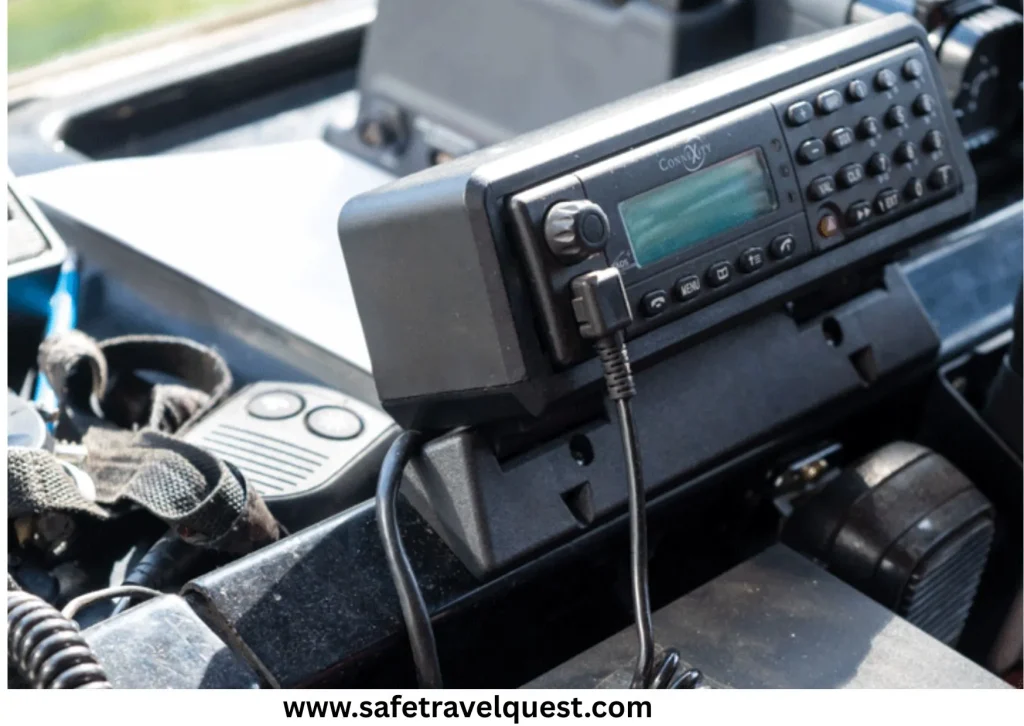
In our case, safetravelquest.com we place value on safety-first equipment. A CB radio is not just any novelty, it is the professional tool in the following situations:
- Weather alerts: A good number of CB radios nowadays have built-in NOAA weather channels. This is essential to those users of travel trailers to be aware of a high wind warning or flash flood warning that may make towing hazardous.
- Accident Warnings: CB communication is real time so you are able to hear of a multi-car pile up immediately when it occurs. This enables the operator of a tow car that is far much longer to decelerate than a normal vehicle.
- Live Hazard Reports: You can often hear on CB airwaves about the presence of so-called gator backs (shredded semi-tires) in the roadway or in low-hanging trees in a narrow backroad, which you can then use to save your trailer roof and tires.
CB radio can also be installed in a travel trailer.
It is crucial to determine the place of putting your equipment whether in functionality or safety.
- Tow Vehicle Positioning: A mobile unit should be attached to the tow vehicle in the dash, or the center console. This gives the driver the ability to tweak the squelch and the volume after which his/her eyes are not off the road.
- Antenna Considerations: this is the most significant of the set up. Due to the tendency of a travel trailer to be higher than the truck, it is common to install the antenna on the fender or the roof of the truck. Other individuals will simply attach the antenna to the firewall or bumper of the travel trailer, however this will involve a great deal of running of cables that can cause loss of the signal in case of improper installation.
- Power Source: The majority of units are hard wired into a 12V system in the vehicle. Tap into the house battery system: by placing a radio into the trailer, one can tap into the house battery system, but only with an appropriate fuse.
Legal and technical issues.
Licensing is not necessary to use a CB radio in the United States, although it has regulations to be observed.
- FCC Regulations: The FCC restricts CB to a 4 watt AM and 12 watt SSB (Single Side Band). Amplification of power by use of linear amplifiers is unlawful and may induce disruption of emergency frequencies and electronics in the locality.
- Channel Etiquette: Channel 19 is the road channel of truckers. Channel 9 will only be used in case of emergencies. When speaking to friends in a convoy, it is always proper to push to a less busy channel such as 11 or 21 channels leaving the main channels free.
- SWR Tuning: You are required to tune your antenna with an SWR (Standing Wave Ratio) meter. The old fashioned antenna can even ruin the inside parts of your radio, as well as lower your range significantly.
Some of the pitfalls that RV owners should be aware of.
- Less Than Ideal Antenna Grounding: CB antennas require a ground plane (a big metal surface) to reflect the signal. Since much of the newer generation of travel trailers are composed of either fiberglass or aluminum, it might be a difficult matter to locate an appropriate ground, which sometimes necessitates a special “no-ground-plane” antenna.
- Poor Mounting: fitting a radio in a place that can block an airbag, or can get in the way of the legroom of the driver is also a serious safety risk.
- Trusting in CB Alone: You must not assume that the CB will come to your rescue. It must be an element of a communication kit consisting of a cell phone and, hopefully, a satellite-based SOS device.
- Not Testing: The most frequent case is with the travelers installing a radio but never checking on the SWR or range until they find themselves in an emergency state.
Alternatives to CB Radios
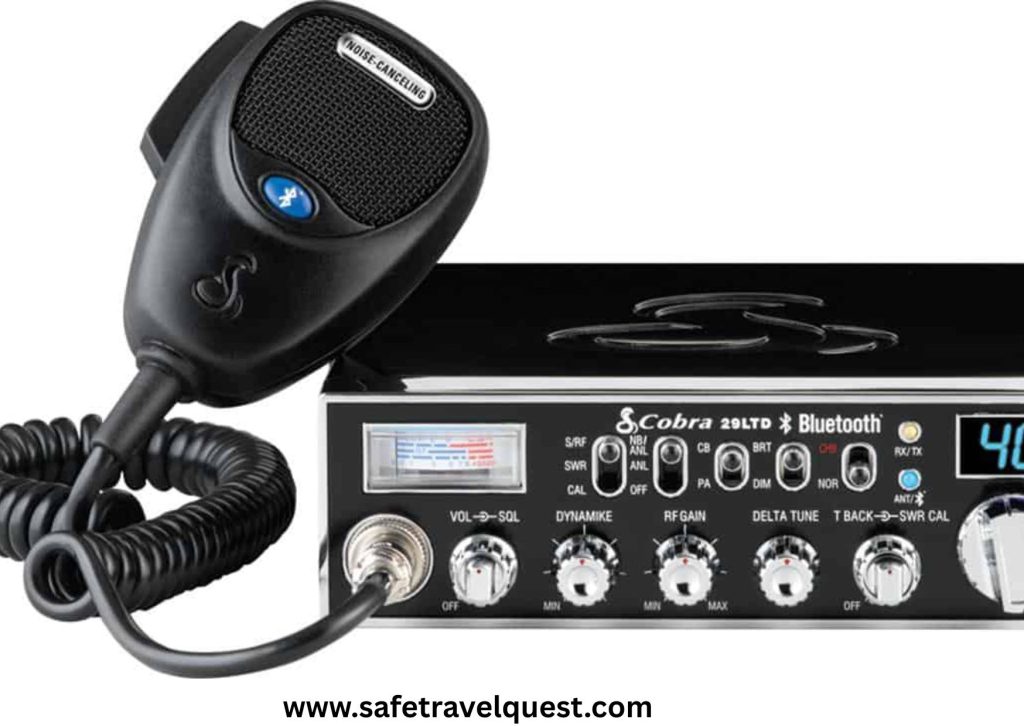
You do not like the key-boarding of a CB radio, there are other methods:
- GRMS (General Mobile Radio Service): These involve a mere $35 license (no examination) and much superior FM sound quality. They are also becoming the norm of convoys that are not tracked by truckers.
- Ham Radio: Test and licensure. It has amazing scope (even global) but is more difficult to use and found not to be good in informal “highway talk” mode.
- Mobile Apps: Apps such as Zello are designed to seem like a radio push-to-talk, yet they still need a data connection over a cellular network to work, so they are useless in the same places that you need a radio the most.
Should a CB Radio Be in the Repertoire of the Recreational RV Member?
A CB radio can be unnecessary to the casual weekend traveler staying in major interstates and in well-developed campgrounds. But, travelling in the American West or the Canadian Rockies or any other place where you can find No Cell Service signs nailed to the doorposts, then the investment is worthy.
Price is comparatively cheap, and the peace of mind provided by having access to road conditions reported by professionals is a great prerequisite to anyone pulling several thousand pounds of trailer behind them.
Frequently Asked Questions
Will a CB radio come in handy when traveling in an RV?
Yes. Safety is its main application other than social interaction. It gives you more time to respond to hazards on the road, changes in weather and traffic jams as the truck drivers are many miles ahead of you and hence able to communicate with you.
Do contemporary RV owners utilize CB radios?
Although they are not prevalent as they once were 30 years ago, a large percentage of the RV community, particularly the boondockers and those who travel in groups, still use them when there are no cell towers.
Is it possible to install a CB in a trailer rather than the truck?
You can, it is not so convenient in terms of precaution when driving. In case you want a radio to use in the campsite, a handheld CB or one in the trailer would do the job. The radio should be in the tow car in terms of road safety.
Is CB better than GMRS for RVs?
Under most circumstances, GMRs has a superior sound quality and range but CB is the best when it comes to road safety since you can communicate with the truck drivers unlike GMRS.
Final Practical Advice
Should you choose to become a member of the ranks of travelers equipped with radios, the first thing to do is the installation of the antenna. A radio having a poor antenna fitted that is mounted poorly will not work well as compared to having a radio that has a high quality antenna installed that is tuned perfectly.
The antenna we recommend in case of your tow vehicle or trailer is rich in fiberglass or plastic is the no-ground-plane type. Always check your equipment before you go out of your drive and have a list of the common channels ready. The trick to safe traveling is redundancy; the CB radio is a potent, inexpensive device to make sure that you are never really out of touch.
You may also like it:
Best Hotels in Terlingua Texas : Where to Stay Near Big Bend
Shopping & Local Boutiques in Marfa, Texas
Unique Stays in Marfa: Glamping, Airstreams, and Desert Motels
Top 5 Things to do in Marfa Texas and Travel Guide
Travel Hacks cwbiancavoyage: Intelligent, Pulpmastery Travelfore tips to make 2026 Travels Easier.
Is Marfa Safe in 2025? Crime, Tourism & Road-Safety Review
Best Restaurants in Alpine With Safe Parking
Nimbus Cloud Travel Pillow: Guide to In-Flight Comfort 2026
Flight 441 Bermuda Triangle Travel Route: History, Safety and Facts
Travel Threetrees VN: Brand Research and Legitimacy Guide

I am a passionate writer who creates engaging, creative, and meaningful content that informs, inspires, and connects with diverse audiences.